
To protect your garden through a heatwave, prepare it before the heat arrives by watering deeply, then keep a close eye on your plants during and after. The biggest mistake gardeners make is waiting until plants show they're struggling, because by then they're already under enormous stress. This guide walks through how heat affects plants, what to do before, during and after, and how to keep pots and lawns alive through consecutive 40°C days.
Quick answer: Water deeply 24 to 48 hours before a heatwave so the whole root zone is charged, mulch 50 to 75mm, and shade vulnerable plants from the harsh afternoon sun. During the heat, water early morning and deeply, use cycle-and-soak if water runs off, and check moisture at root depth rather than watering on autopilot. Afterwards, do very little, keep monitoring moisture, and wait for new growth before pruning or feeding.
Table of contents
- How heat actually affects your plants
- Wilting, scorch or sunburn: how to tell
- Which plants are most at risk?
- Preparing your garden before a heatwave
- Mulch and temporary shade
- How to water through extreme heat
- Watering without blowing the water bill
- Looking after potted plants
- Looking after your lawn
- What not to do in a heatwave
- Helping your garden recover
- Frequently asked questions

How heat actually affects your plants
Plants cool themselves through transpiration, drawing water up through their roots, moving it through their stems and releasing water vapour through tiny pores in their leaves. It works much like sweating does for us. When temperatures climb towards 40°C, especially with hot, dry winds, the air pulls moisture from the leaves incredibly quickly.
If the roots can't replace that water fast enough, the plant starts to struggle. To conserve moisture, it closes its stomata, the little pores in the leaves, to reduce water loss. The catch is that closing the stomata also reduces evaporative cooling, so leaf temperatures can climb even higher, creating an even bigger problem.
I live in a cool climate, so when heatwaves hit us, our plants really struggle. That's why I have to be incredibly proactive and keep a close eye on the forecast throughout summer. - Ben Hayman, Horticulturist at Hoselink


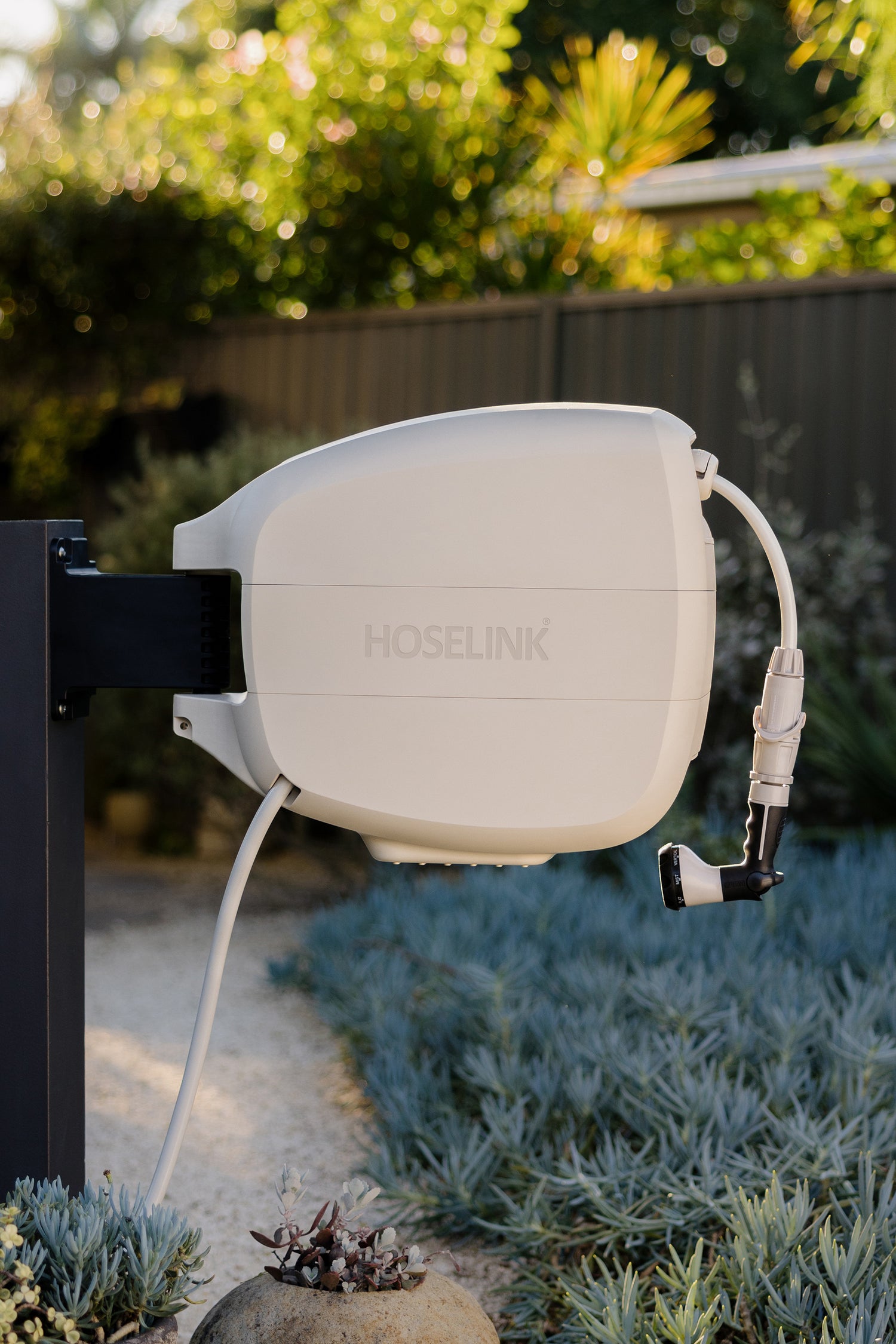
Evolve™ Retractable Hose Reel | Beige

Evolve™ Retractable Hose Reel | Charcoal
Wilting, scorch or sunburn: how to tell
Not all heat damage is the same, and telling the difference tells you whether to act. The single best indicator of serious heat stress is whether a plant recovers overnight.
|
Sign |
What it looks like |
Does it recover? |
|
Temporary wilting |
Leaves droop in the hottest part of the day but recover overnight |
Yes - often a protective response; soil isn't always dry |
|
Permanent heat scorch |
Leaf edges or whole sections turn brown and crispy as cells are damaged |
No - that tissue won't recover |
|
Sunburn |
Pale, bleached, yellow or brown patches on the most exposed leaves or fruit |
No - damaged tissue stays, protect from direct sun |
If a plant is still wilted first thing in the morning, that's a warning sign something more serious is happening. Before you automatically add more water, check the moisture around the roots, because the problem isn't always dry soil.
Which plants are most at risk?
Not all plants respond to extreme heat the same way. Knowing your most vulnerable plants tells you where to focus your effort. The most at-risk include:
- Newly planted trees and shrubs - their roots haven't established into the surrounding soil, so they can only draw moisture from a very small area.
- Moisture-lovers like hydrangeas, camellias and Japanese maples - especially in harsh afternoon sun and drying winds.
- Leafy greens and fruiting veg - lettuce and spinach can wilt, bolt or scorch, while tomatoes and capsicums can drop flowers, set poorly and sunburn.
- Potted plants - limited moisture reserves and roots exposed to much bigger temperature swings.
- Newly laid turf - without an established root system it dries out incredibly quickly.
Established drought-tolerant plants generally cope much better, but even these can suffer when soil moisture gets critically low. For planting choices that handle heat, see our guide to the best drought-tolerant flowers.

Preparing your garden before a heatwave
This is the most important part of the whole process. If you know several hot days are coming, your first priority is getting plenty of moisture right through the root zone before the heat peaks. Don't just wet the top few centimetres, get water down where the majority of the roots are.
- For established garden beds, wet the soil 20 to 30cm deep, depending on your plants and soil.
- For trees, think about the broader root zone, not just the soil against the trunk.
- Water thoroughly 24 to 48 hours beforehand, so the soil has time to absorb and distribute moisture before temperatures spike.
In gardens with dry, compacted or water-repellent soil, water can run off or fail to soak in evenly. A Root Waterer & Soil Breaker delivers water below the surface and closer to the roots, rather than relying on surface water to find its way down. If your soil is genuinely hydrophobic, a quality soil-wetting agent helps too.

Classic 30m Retractable Hose Reel | Beige
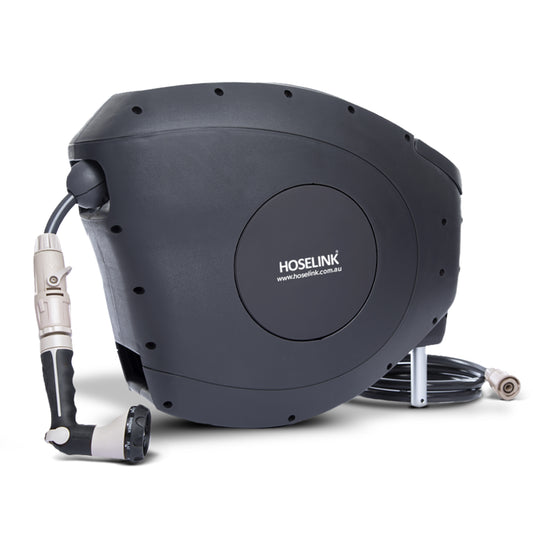
Classic 30m Retractable Hose Reel | Charcoal
Mulch and temporary shade
A good layer of mulch is one of the simplest and most effective ways to protect your garden. Aim for about 50 to 75mm of organic mulch, such as pine bark or wood chips, around established beds.
Mulch helps by reducing evaporation, insulating the soil against extreme temperature swings, reducing weed competition for moisture, and improving soil structure and water-holding capacity as it breaks down.
Just keep mulch clear of tree trunks and plant crowns, as piling it against the stem can cause rot. And water the soil thoroughly before mulching if it's already dry, because mulch conserves existing moisture, it doesn't rehydrate dry soil.
For particularly vulnerable plants, temporary shade makes a massive difference. Position shade cloth to block the harsh afternoon sun, especially from the western side, and support it above the plants rather than resting it on the foliage so you keep airflow.
How to water through extreme heat
The best time to water during extreme heat is early morning, ideally around sunrise. Temperatures are lower so evaporation losses are reduced, plants can take up moisture before the day's peak, and you start the day with a hydrated root zone instead of trying to catch up once plants are already stressed.
How you water matters as much as when. Shallow watering concentrates moisture near the surface and, over time, trains plants to grow shallow roots. Deep watering at intervals encourages roots to grow further down, and deeper soil stays cooler and holds moisture longer than the surface.
- During an actual heatwave, water more frequently than normal, especially for new plantings, sandy soils and shallow-rooted plants.
- Monitor moisture at root depth rather than watering automatically just because it's hot. A finger in the soil saves a lot of unnecessary watering.
- If water runs off before it soaks in, use cycle-and-soak: apply a little, let it soak, then repeat.
And yes, you can still water in the middle of the day if a plant is genuinely dehydrated. It's far better to rescue a severely stressed plant than to leave it until the next morning.

Watering without blowing the water bill
This is where good equipment and timing make a huge difference. With a tap timer, irrigation kit or sprinklers, you can set a consistent early-morning routine without standing outside watering every bed by hand.
- Group plants with similar watering needs together.
- Use drip irrigation or targeted watering wherever you can.
- Adjust watering duration to your soil type and the plants' needs.
- Check sprinkler coverage so you're not watering paths and driveways.
- Use timers to water early, but keep adjusting the schedule to actual soil moisture.
A tap timer, irrigation kit or sprinkler from our watering range makes an efficient, hands-off routine easy. For the full method, see when you should water your garden.
Looking after potted plants
Potted plants are usually the first casualties of a heatwave. Their roots sit in a small volume of mix that heats up and dries out fast, and dark pots in direct sun get especially hot. Once a potting mix dries out completely, it can turn water-repellent, so water runs straight down the sides without rehydrating the root ball.
- Move pots out of the harsh afternoon sun. Gentle morning sun with afternoon shade suits many plants in extreme heat.
- Group pots together to create a sheltered microclimate and reduce exposure to drying winds.
- Remember terracotta is porous and loses moisture through its walls, and small dark plastic pots heat up quickly. Larger pots hold more moisture and keep root temperatures more stable.
- Sit a smaller pot inside a larger decorative one for insulation, as long as drainage isn't affected.
For a severely dried-out mix, rewater slowly or soak the whole pot until the root ball is evenly moist, then let the excess drain. In a sustained heatwave, some pots may need watering daily, or even twice a day, depending on size, position and mix quality.
Looking after your lawn
Different turf species respond very differently. Warm-season grasses like couch, kikuyu and buffalo are generally better suited to Australian summers than cool-season grasses, though even they can struggle through extended heat. Watch for the early signs of stress: a dull, blue-grey colour, leaves folding or rolling to reduce exposed surface area, and footprints staying visible after you walk across (healthy turf springs back).
- Raise your mowing height. Longer grass shades the soil and protects the crown of the plant.
- Don't apply high-nitrogen fertiliser before or during extreme heat. Pushing soft growth when water is limited makes things worse.
- Avoid herbicides in extreme heat. Many have temperature limits and can damage already-stressed turf.
- Water thoroughly when needed, replenishing the active root zone rather than applying small amounts that barely penetrate.
- Reduce foot traffic.
Newly laid turf is a different story. It can dry out rapidly, so it may need several light waterings through the day during extreme conditions until the roots establish. For a full lawn routine, see our guide to bringing your lawn back to life after winter.

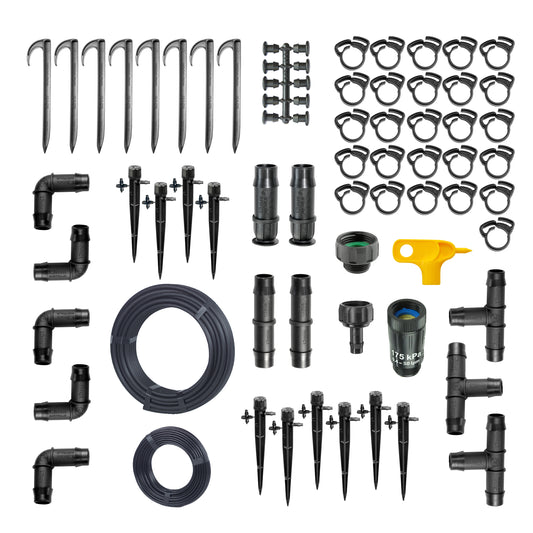
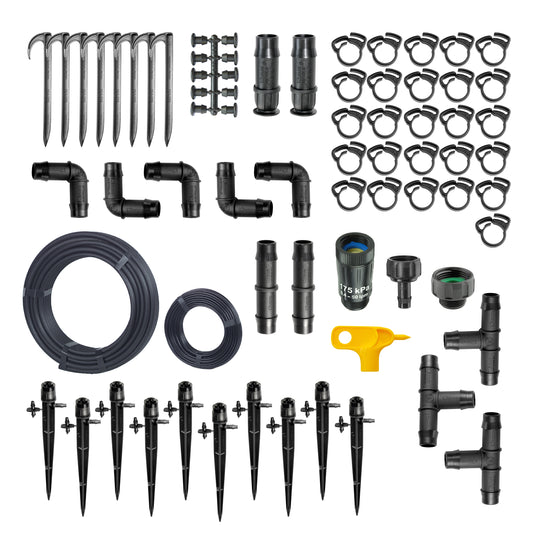
Adjustable Drip Irrigation Kit
What not to do in a heatwave
-
Don't fertilise stressed plants. The last thing you want is to push new growth. A seaweed solution is far better and helps plants cope with stress.
-
Don't do heavy pruning. Removing foliage exposes previously shaded stems, branches and fruit to direct sun and sunburn.
-
Don't repot or transplant unnecessarily. Disturbing roots in extreme heat adds another layer of stress.
-
Don't assume more water is always better. The goal is adequate moisture and oxygen in the root zone, not permanently saturated soil.
Helping your garden recover
When temperatures return to normal, the temptation is to cut off every damaged leaf and fertilise everything back to life. Do the opposite: very little at first, and give plants a chance to recover. A plant that looks terrible straight after a heatwave isn't necessarily dead. Some leaves may be permanently damaged while the stems, buds and roots are perfectly healthy.
Keep monitoring soil moisture and water as required, but don't suddenly flood everything. Wait until it's clear which sections are dead before any major pruning, which for woody shrubs and trees might take several weeks. If you're not sure whether a branch is alive, lightly scratch the bark: green, moist tissue underneath means it's still living.
Hold off on fertiliser until the plant is actively recovering and producing healthy new growth. Fertiliser isn't a cure for heat stress, water management, healthy roots and suitable growing conditions matter far more during recovery. For lawns, wait until the turf is actively growing again before fertilising or doing any renovation work.
I think having shade trees in the garden is vital. They create such a change in temperature for everything around them, and can be the difference between a garden surviving through summer or thriving through it. And of course, they add beauty and structure too. - Ben Hayman, Horticulturist at Hoselink

Frequently asked questions
When should I water before a heatwave?
Water thoroughly 24 to 48 hours before the heat peaks, so the soil has time to absorb and distribute moisture right through the root zone. Wet established beds to 20 to 30cm deep. Preparing beforehand is far more effective than trying to catch up once plants are already stressed.
What time should I water during extreme heat?
Early morning, ideally around sunrise. Temperatures are lower, evaporation is reduced, and plants start the day with a hydrated root zone before the peak heat. You can still water midday if a plant is genuinely dehydrated, it's better to rescue a stressed plant than wait.
How do I tell heat stress from dry soil?
Check whether the plant recovers overnight. Temporary wilting in the hottest part of the day that recovers by morning is often a protective response, not necessarily dry soil. If a plant is still wilted first thing in the morning, check moisture at the roots before adding more water.
Should I fertilise plants after a heatwave?
Not straight away. Wait until plants are actively recovering and producing healthy new growth. Fertiliser isn't a cure for heat stress and can do more harm by pushing growth a stressed plant can't support. A seaweed solution is a better choice to help plants cope and recover.
How do I protect potted plants in a heatwave?
Move pots out of harsh afternoon sun into morning sun with afternoon shade, and group them together to create a sheltered microclimate. Larger pots hold moisture better than small or dark ones. Some pots may need watering daily, or twice a day, and a dried-out mix should be soaked slowly until evenly moist.
A little preparation is what gets a garden through an Australian summer. Set up an efficient, early-morning routine with our watering range, from the Root Waterer & Soil Breaker to tap timers and irrigation kits, and keep your garden hydrated through the hottest days.