
To bring your lawn back to life after winter, clean it up, relieve compaction, then feed, water and mow it correctly as growth returns in spring. A tired winter lawn is rarely dead, it is just hungry, compacted and full of thatch. This is my step-by-step guide to getting it thick, green and ready for summer.
I think everyone loves a good lawn, but unfortunately most people just throw out some fertiliser and think the job is done. That couldn't be further from the truth. — Ben Hayman
Quick answer: Rake and de-thatch, aerate compacted soil, then raise your mower and take only the top third at the first mow. Feed with a high-nitrogen slow-release fertiliser and water it in, water deeply in the morning, repair bare patches, edge, top-dress low spots, and check your irrigation before summer. Do it in early spring and your lawn recovers fast.
Table of contents
• Start with a good clean-up and dethatch
• How do you fix compacted soil?
• The first mow of spring
• How do you feed your lawn?
• How should you water your lawn?
• How do you repair bare patches and top-dress?
• Weeds and edging
• Get ready for summer: irrigation, pests and disease
• Lawn care mistakes to avoid
• Frequently asked questions
Start with a good clean-up and de-thatch
Begin by clearing everything sitting on top of the lawn, because light and airflow are what wake it up. Rake away leaves, sticks and dead grass, and remove any debris that is blocking sunlight or airflow. This alone makes an immediate difference to a lawn that has sat under winter litter.
If your lawn feels spongy underfoot, or there is a thick layer of dead material at the base, it needs de-thatching. Thatch is that build-up of dead stems and roots between the green blades and the soil. A light rake or a de-thatching tool lifts it out, so water, air and nutrients can reach the soil again.
How do you fix compacted soil?
Aerate the lawn if water pools on the surface or the ground feels hard. Most lawns get compacted from a spring and summer of foot traffic and mowing, and compaction quietly strangles the roots. Aeration opens the soil so air, water and nutrients reach the root zone and roots can grow deeper.
For a small lawn, a garden fork or a pair of aerating shoe spikes does the job, just push in and rock gently to open the soil. For a large area, or badly compacted ground, hire a lawn corer that pulls out plugs of soil. Do not skip this step because it seems minor. It is one of the most important things you can do for a lawn.

The first mow of spring
For the first mow, raise your mower height and take only the top third of the grass. Cutting more than a third at once scalps and stresses the lawn just as it is trying to recover. A higher cut keeps more leaf to photosynthesise and shades out weeds.
• Raise the mower height to avoid scalping, and remove no more than the top third of the leaf.
• Keep the mower blades sharp. A sharp blade makes a clean cut, while a blunt one tears the grass and leaves it prone to disease.
• Once growth picks up, mow weekly to keep promoting fresh, dense growth.


Evolve™ Retractable Hose Reel | Beige

Evolve™ Retractable Hose Reel | Charcoal
How do you feed your lawn?
Feed your lawn in early spring with a quality, lawn-specific slow-release fertiliser that is high in nitrogen to green up the leaf blades. Spring growth is hungry growth, and the right feed now sets up the whole season. Always water the fertiliser in so it doesn't sit dry on the leaf and burn it.
If you skip watering it in, dry fertiliser can scorch the foliage and leave brown patches everywhere. For a fast green-up between pellet feeds, a liquid fertiliser applied through a hose-end spray mixer works quickly.
My ideal feeding plan is to apply slow-release pellets two to three times a year, with a liquid feed in between each pellet feed. That gives steady background nutrition plus a boost when the lawn needs it.
For a fuller seasonal feeding and sprinkler routine, see our Love Your Lawn sprinkler guide.
How should you water your lawn?
Water deeply and less often, and always in the morning. Deep watering encourages stronger, deeper roots, which makes the lawn far more resilient through the blazing sun and heat of summer. Watering in the morning means the lawn isn't sitting wet overnight, which invites fungal problems.
A quick daily sprinkle does the opposite of what you want, keeping roots shallow and the surface constantly damp. It also uses a surprising amount of water. According to Sydney Water, a running sprinkler can use around 999 litres per hour, so a deep soak once or twice a week, timed for the morning, is both healthier for the lawn and easier on the water bill.
See when you should water your garden for the deep-watering method, and browse our sprinklers if you're setting up.
How do you repair bare patches and top-dress?
Repair bare patches by clearing the dead grass, loosening the soil, adding fresh topsoil, then sowing seed or laying new turf. Keep the area evenly moist until the new grass establishes, and hold off mowing it until it has taken. Patience here pays off with an even, knit-together lawn.
If the surface is uneven or bumpy, top-dress it. Apply a sandy top dressing to smooth out low and uneven areas. The sandy mix improves drainage and lets the grass grow up through it easily, levelling the lawn over a season or two without smothering it.
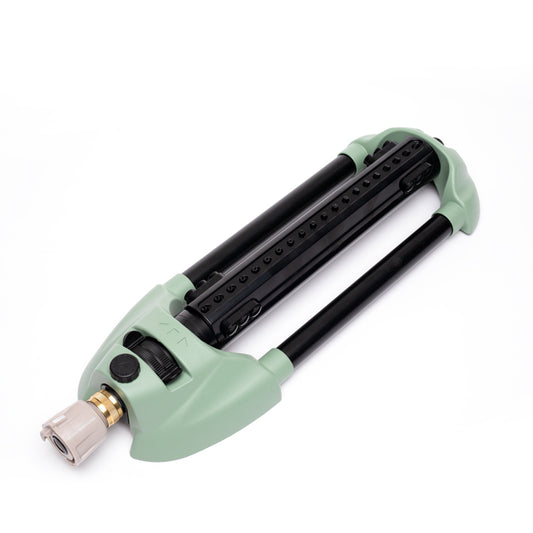
Oscillating Sprinkler
Weeds and edging
Weed little and often, and edge the lawn to finish. Small weeds are far easier to remove, haven't gone to seed, and haven't smothered the grass yet, so a quick regular weed stops them getting established. Letting them go to seed just creates next season's problem.
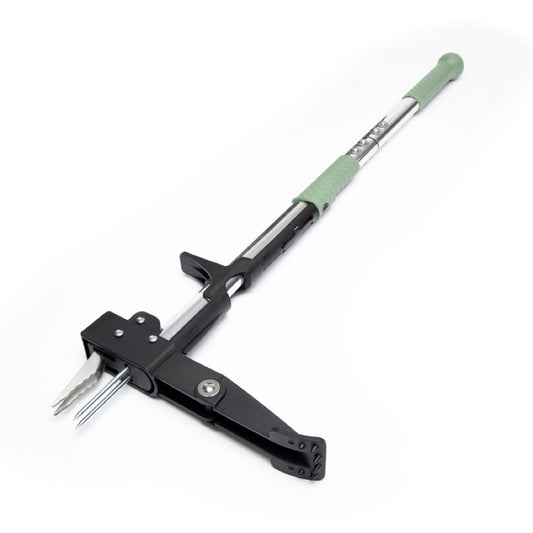
For larger, established weeds, the Hoselink Stand-up Weed Puller removes the entire tap root and is easy on your back, so there's no bending or kneeling.
Then cut a fresh edge between the lawn and your garden beds. Crisp edges instantly make a lawn look tidy and professionally maintained. They also stop grass creeping into the beds and give you a clean line to whipper-snip against, rather than flicking soil and mulch across the lawn.

Get ready for summer: irrigation, pests and disease
Before summer arrives, test your irrigation and keep an eye out for pests and disease. Run the whole system and check for leaks, blocked nozzles and uneven coverage, then fix them while the weather is still mild. It is far better to find a problem now than in the first heatwave.
If you don't have an irrigation set-up, our range of sprinklers and hoses makes even coverage easy. While you're out there, watch for lawn grubs, fungal disease, moss and yellowing patches. Early action is always easier than fixing a major problem later.
Lawn care mistakes to avoid
Most lawn problems come from a handful of habits. Avoid these and you're most of the way to a great lawn:
• Mowing too short, which scalps and stresses the grass.
• Mowing in the same direction every time, which creates ruts and compaction. Change direction each mow.
• Whipper-snipping the edges too hard. Cut too low and the lawn gradually recedes, because it won't grow back.
• Watering lightly every day instead of deeply and less often.
• Flooding the lawn.
• Letting weeds go to seed.
• Ignoring compacted soil. It seems unimportant, but it really matters.
• Expecting instant results. A lawn recovers over weeks, not days.
Think of your lawn as thousands of small, fragile plants, because that is exactly what they are. They need more attention than the plants in the garden. They have much shallower roots, cop a lot more abuse, and don't have a nice layer of compost or mulch protecting them. — Ben Hayman

Classic 30m Retractable Hose Reel | Beige
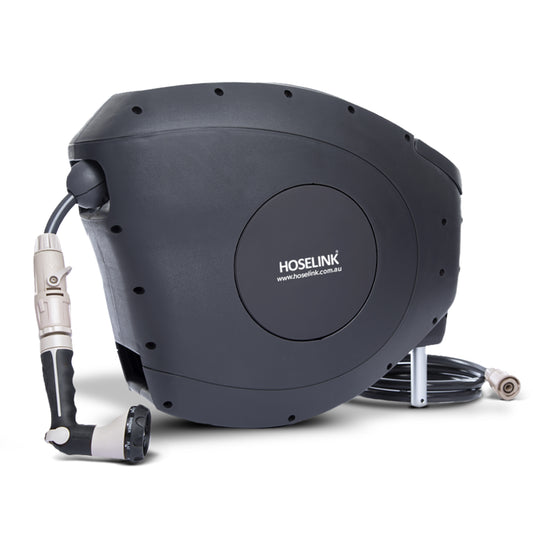
Classic 30m Retractable Hose Reel | Charcoal
Frequently asked questions
When should I start reviving my lawn after winter?
Start in early spring, which is September in most of Australia, as growth returns and the frost risk eases. Getting the clean-up, aeration and first feed done early means the lawn thickens up well before the summer heat. In cool zones, wait until the lawn is clearly growing again.
How short should I cut my lawn in early spring?
Never remove more than the top third of the leaf in a single mow, and raise your mower height for the first cut of the season. Cutting shorter scalps and stresses the grass just as it is trying to recover. Keep the blades sharp for a clean cut and mow weekly as growth speeds up.
What fertiliser is best for a spring lawn?
Use a quality, lawn-specific slow-release fertiliser that is high in nitrogen to green up the leaf, and always water it in so it doesn't burn the foliage. My preferred plan is slow-release pellets two to three times a year, with a liquid feed in between for a quick boost.
How often should I water my lawn?
Water deeply once or twice a week rather than a little every day, and do it in the morning so the lawn isn't wet overnight, which invites fungal disease. Deep watering drives roots deeper and makes the lawn far more resilient through summer heat.
How do I fix bare patches in my lawn?
Remove the dead grass, loosen the soil, add fresh topsoil, then sow seed or lay new turf. Keep the area evenly moist until the grass establishes, and hold off mowing until it has knitted in. For uneven spots, a sandy top dressing levels the surface over time.
Do I really need to aerate my lawn?
Yes, if water pools or the ground feels hard. Most lawns compact from foot traffic and mowing, and compaction restricts air, water and nutrients at the roots. Aerating with a fork, shoe spikes or a hired corer opens the soil and encourages deeper, stronger roots.
Work through the list in order and give it a few weeks, and your winter-worn lawn will come back thick and green. To set yourself up, browse our sprinklers and watering range and the Stand-up Weed Puller for an easier season on the lawn.