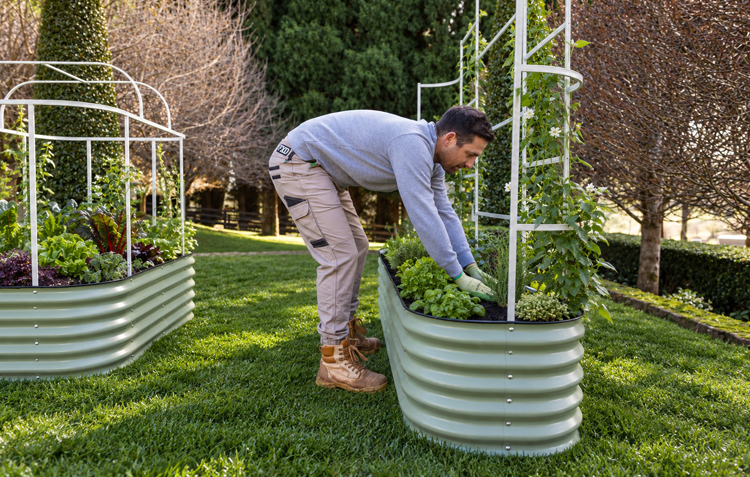

To fill a raised garden bed, layer coarse organic material at the bottom, build up with alternating carbon-rich and nitrogen-rich layers, then finish with a generous depth of quality soil and compost on top. This layering method saves on expensive soil and feeds the bed for years. Here is how to do it, from choosing the spot to the final layer of mulch.
Quick answer: Position the bed for 6 to 8 hours of sun with easy water access. Loosen hard ground and lay cardboard to suppress weeds. Fill deep beds from the bottom up with logs and branches (a Hugelkultur approach), then twigs and woodchip, then alternating brown and green layers, wetting as you go. Top with at least 20cm of quality veggie mix and mature compost, leave 5 to 10cm below the rim, and finish with 5cm of mulch.
Table of contents
- Where should you put your raised bed?
- How do you prepare the ground?
- The layering method: what goes in the bottom
- Building up the middle layers
- The top 20cm: where it really matters
- Mulch, settling and topping up
- Common mistakes to avoid
- Frequently asked questions


6 in 1 Metal Raised Garden Bed | 43cm Tall | Sage

9 in 1 Metal Raised Garden Bed | 43cm Tall | Sage
Where should you put your raised bed?
Put your raised bed where it gets 6 to 8 hours of sunlight a day, with easy access to water. Most vegetables need 6 to 8 hours or more of direct sun to crop well, so sun is the first thing to get right. Everything else is easier to fix than a shady spot.
- Aim for 6 to 8 hours of direct sun a day; 6 to 8 or more is ideal for most vegetables.
- Avoid spots heavily shaded by buildings, fences or large trees.
- Make sure you have easy access to water nearby.
- Leave enough room to comfortably reach all parts of the bed from the sides.
If you are still choosing or setting up a bed, our metal raised garden bed buyer's guide covers sizes, positioning and placement in more detail.
How do you prepare the ground?
Prepare the ground by cutting down weeds and grass, then laying cardboard to suppress regrowth. You generally don't need to turn over the existing soil underneath, because the open base of the bed lets roots and worms move down into it over time.
There is one exception. If the ground is rock hard, loosen it first to help with drainage, so water doesn't sit at the base of the bed. Otherwise, keep it simple:
- Mow or cut down the weeds and grass where the bed will sit.
- Lay plain cardboard flat over the ground to smother weeds. It is not 100% necessary, but it helps, and it breaks down over time. Use plain, uncoated cardboard and avoid anything waxed or glossy.

Metal Wall Trellis for 6 in 1 Garden Bed

The layering method: what goes in the bottom
For a deeper bed, start with logs, old branches and chunky sticks in the bottom. This is a Hugelkultur-style approach, where woody material slowly breaks down to hold moisture and provide a long-term source of organic matter. It also fills space, so you need far less expensive soil to top up.
Once the big pieces are in, pack the gaps. Add smaller sticks, twigs, woodchips and other coarse organic material into the spaces between the logs. This settles the base and further reduces how much soil or compost you will need to buy.
A quick note on depth: the deeper the bed, the more you can get away with using logs, branches and bulk organic material down low. For a shallow raised bed, prioritise good-quality soil and compost rather than filling too much space with woody material. Our raised bed gardening guide has more on this.
Building up the middle layers
Build the middle by alternating carbon-rich 'brown' layers with nitrogen-rich 'green' layers, wetting each layer as you go. Mixing browns and greens is what helps the lower layers gradually break down into rich, living soil, much like a compost heap does.
- Carbon-rich (browns): dry leaves, straw, shredded plain cardboard or old plant material.
- Nitrogen-rich (greens): fresh grass clippings, green garden waste or well-rotted manure.
Wet each layer as you build so the whole bed is damp, which kick-starts the breakdown process. Just be selective about what goes in: avoid diseased plants, weeds full of mature seeds, and invasive weeds, or you will plant problems into the bed from day one.

The top 20cm: where it really matters
Next, a layer of well-aged compost. Over the middle layers, add a generous layer of well-aged compost. This brings organic matter, nutrients and beneficial soil biology into the bed, and forms the rich base your growing layer sits on.
Then the top 20cm, the important bit. The top 20cm is the most important part of the bed, because this is where your vegetables first establish their roots. Fill it with a quality vegetable garden mix or topsoil, with mature compost mixed through, so young plants have rich, well-structured soil to grow into.
One important warning: never plant directly into unfinished compost or fresh manure, because it will burn your plants. Everything in that top layer should be well-aged and mature. For what to grow once it's ready, see our kitchen garden guide.


Year-round Greenhouse System for 9 in 1 Garden Bed
Mulch, settling and topping up
Finish with mulch, and don't fill the bed right to the brim. Leave roughly 5 to 10cm below the top edge, which gives you room for mulch and stops soil washing over the sides when you water. Then add around 5cm of straw, sugar cane or similar organic mulch over the top.
Mulch does a lot of quiet work. Applying 7 to 10 centimetres of mulch around plants can save up to 70% of the water otherwise lost through evaporation.
Finally, expect the bed to sink. As the logs, leaves and other organic material break down, the level of the bed will drop over time. This is normal and a sign the bed is working, so each season simply top it up with compost, aged manures and quality soil.
Common mistakes to avoid
A few missteps can undo all your effort. Watch for these:
- Planting into unfinished compost or fresh manure, which burns roots.
- Filling the bed to the brim, so soil and mulch wash over the sides when watering.
- Adding diseased plants, seeding weeds or invasive weeds to the layers.
- Packing a shallow bed with woody material instead of good soil and compost.
- Forgetting to wet each layer, which slows the whole bed down.
- Not topping up as the bed settles each season.

Frequently asked questions
What is the cheapest way to fill a raised garden bed?
Fill the bottom of a deeper bed with logs, branches, twigs and woodchip, a Hugelkultur-style approach, then build up with alternating brown and green organic layers before topping with soil and compost. The bulky material fills space for free, so you buy far less soil. Keep the quality mix for the top 20cm where roots grow.
What do you put in the bottom of a raised garden bed?
In a deeper bed, start with logs, old branches and chunky sticks, then fill the gaps with smaller twigs, woodchip and coarse organic material. This holds moisture, breaks down into long-term organic matter and reduces how much soil you need. For shallow beds, use less woody material and more good soil.
How deep should the good soil be in a raised bed?
Aim for at least the top 20cm to be quality vegetable garden mix or topsoil with mature compost mixed through, as this is where vegetables establish their roots. Below that you can use compost, aged manure and bulky organic layers. Never plant into unfinished compost or fresh manure.
Should I put cardboard down before filling a raised bed?
It helps but isn't essential. Mow the weeds and grass, then lay plain, uncoated cardboard over the ground to suppress regrowth. It breaks down over time and lets roots and worms move into the soil below. Avoid waxed or glossy cardboard, as the coatings can leach into the soil.
Why does my raised garden bed keep sinking?
Sinking is normal and a good sign. As the logs, leaves and organic material inside break down, the bed level drops over time. Simply top it up each season with compost, aged manure and quality soil to keep it full and productive.
Fill it well once and a raised bed will reward you for years. If you're still setting up, browse the Hoselink Metal Raised Garden Bed range, and gear up for easy watering with our watering range.