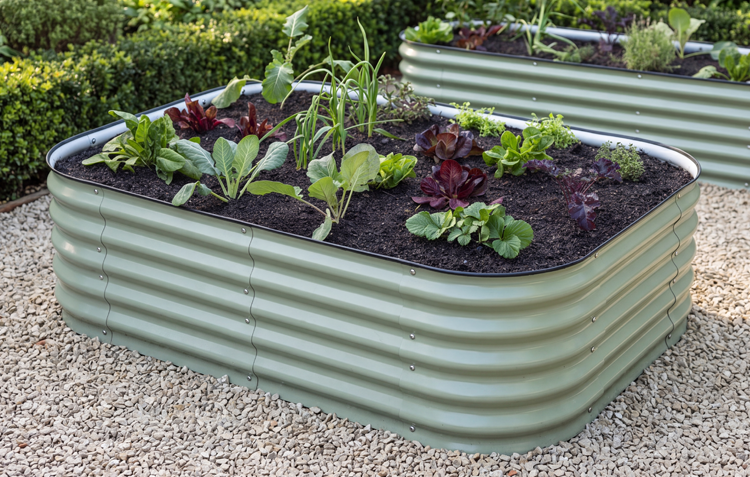
A metal raised garden bed gives you control over your soil, layout and growing season in a way in-ground gardening can't match, and a well-made one will outlast a timber bed many times over. This guide is for any Australian gardener choosing their first raised bed or upgrading a tired one. You will learn what to look for, how the Hoselink 6-in-1 and 9-in-1 beds compare, what the trellis and greenhouse add-ons do, and what to plant through the seasons.
Quick answer: The best metal raised garden bed is food-safe, made from rust-resistant coated steel, tall enough for deep roots (around 40cm), and modular so it fits your space. Hoselink's 6-in-1 and 9-in-1 beds are 43cm tall, built from Zn-Al-Mg coated steel with a food-safe finish, and reconfigure into multiple shapes. Choose the 6-in-1 for smaller spaces and the 9-in-1 for larger gardens, and note that a matching trellis and greenhouse are available for both beds.
Table of contents
• Why choose a metal raised garden bed?
• 6-in-1 vs 9-in-1: which Hoselink bed is right for you?
• Trellis and greenhouse: the add-ons explained
• What size and position should you choose?
• How do you set up and fill your bed?
• What should you plant, and when?
• Frequently asked questions


6 in 1 Metal Raised Garden Bed | 43cm Tall | Sage

9 in 1 Metal Raised Garden Bed | 43cm Tall | Sage
Why choose a metal raised garden bed?
A quality metal raised garden bed won't rot, warp, splinter or leach chemicals the way timber can, and it won't crack or go brittle like plastic. The best beds are made from zinc-aluminium-magnesium (Zn-Al-Mg) coated steel, which resists rust for decades and is safe for growing food. That combination of longevity and food safety is why metal has become the premium choice.
Zn-Al-Mg steel adds magnesium and aluminium to the zinc coating, which makes it roughly three times longer-lasting than older galvanised steel for the same coating thickness. It is also self-healing at scratches and cut edges, where the coating migrates to cover exposed steel, so knocks during assembly don't turn into rust spots.
For growing food specifically, the coating is stable and inert in soil. Zinc and magnesium are actually plant micronutrients, so there are no toxic heavy metals leaching into the root zone, a common reason gardeners move away from CCA-treated timber or old railway sleepers. Steel also warms quickly in spring, gently warming the surrounding soil and giving seedlings an earlier start.
Here is how the main garden bed materials compare:
|
Attribute |
Zn-Al-Mg steel |
Galvanised steel |
Timber |
Plastic / composite |
|
Rust resistance |
Excellent: Approximately 3x longer life; thrives in coastal, humid, alkaline soil |
Moderate: rusts through over years, especially at cuts |
Rots, warps, insect damage |
Won't rust, but can crack over time |
|
Cut & scratch protection |
Self-healing coating |
Bare steel rusts at cuts |
N/A |
N/A |
|
Expected lifespan |
Decades |
Short to moderate |
A few years untreated |
Moderate, UV dependent |
|
Soil-contact safety |
Inert; Zn/Mg are micronutrients |
Zinc micronutrient |
Preservatives can leach (e.g. CCA) |
Usually inert; check food-safe grade |
|
Shape stability |
Maintains shape season after season |
Degrades with rust |
Bows, twists, rots |
Can bow under soil pressure |

6-in-1 vs 9-in-1: which Hoselink bed is right for you?
Both Hoselink beds are built to the same specification and differ only in how many configurations they offer. The 6-in-1 suits smaller spaces and first-time growers, while the 9-in-1 adds panels for larger layouts. A matching Metal Wall Trellis and Year-Round Greenhouse System are made for specific configurations of each bed, so the add-ons work with whichever model you choose. The name refers to the number of shapes each kit can be built into.
Both stand 43cm (17 inches) tall, use 0.6mm steel panels with aluminium cross-support rods to hold their shape, and are finished with a food-safe paint lining and food-grade 304 stainless steel hardware. Rounded corners and full rubber safety edging make them safe to work around, which matters with children and pets nearby.
|
Feature |
6-in-1 Garden Bed |
9-in-1 Garden Bed |
|
Panels included |
4 rounded corners + 6 straight panels |
4 rounded corners + 8 straight panels |
|
Height |
43cm (17") |
43cm (17") |
|
Panel thickness |
0.6mm steel + aluminium support rods |
0.6mm steel + aluminium support rods |
|
Coating |
Zn-Al-Mg steel, food-safe lining |
Zn-Al-Mg steel, food-safe lining |
|
Key configurations |
198x61, 152x107, 152x61, 107x107, 107x61, 61x61 cm |
244x61, 198x107, 198x61, 152x152, 152x107, 152x61, 107x107, 107x61, 61x61 cm |
|
Largest layout |
198x61 or 152x107 cm |
244x61 or 198x107 cm |
|
Assembly |
PH2 screwdriver or drill, approximately 35-40 min |
PH2 screwdriver or drill, approximately 35-40 min |
|
Add-ons |
Trellis fits 198x61cm configuration |
Trellis fits 244x61cm configuration |
|
Warranty |
5-year warranty |
5-year warranty |
Both beds sit on top of the ground with no permanent fixing, so renters can set up a productive garden and take it with them when they move. Every panel and fitting is 100% recyclable at the end of its life.

Metal Wall Trellis for 6 in 1 Garden Bed


Trellis and greenhouse: what the add-ons do
Two add-ons turn a single bed into a complete growing system: the Metal Wall Trellis for vertical growing, and the Year-Round Greenhouse System for season extension and pest control. Both frames are made from the same Zn-Al-Mg steel, attach to the bed with all hardware included, and are sized specifically for the Hoselink beds rather than being an approximate universal fit.
Important: the trellis and greenhouse are designed to be used independently, not together on the same bed. The height of the trellis means the two can't be combined. Choose the trellis for vertical crop growing, or the greenhouse when frost protection and pest control are the priority.
The Metal Wall Trellis adds a third dimension to your growing space. Train tomatoes or cucumbers up the frame and you free up soil below for companion crops, keep fruit clean and straight, and improve airflow, which lowers the risk of fungal diseases like powdery mildew. It suits tomatoes, cucumbers, snow peas, climbing beans, passionfruit, sweet peas and climbing roses, and you can use all the rods for a full-length trellis or fewer for a narrower run.
The Year-Round Greenhouse System comes with two interchangeable covers. The solid PE cover traps heat and moisture to create a warm microclimate that shields seedlings from frost, letting you start earlier in spring and keep harvesting greens and root veg through winter. Swap to the mesh cover for the warmer months as a breathable barrier against pests and birds, with no sprays or netting needed. A full-length zipper on both covers lets you water and check plants without removing the cover.
One thing to plan for: each add-on fits one specific bed configuration, so build your bed in the matching layout. On the 6-in-1 bed, the trellis fits the 198 x 61cm configuration and the greenhouse fits the 152 x 107cm configuration. On the 9-in-1 bed, the trellis fits the 244 x 61cm configuration and the greenhouse fits the 198 x 107cm configuration.

What size and position should you choose?
Choose your bed by the space you have and how much you want to grow. As a rule, pick the 6-in-1 for compact yards and the 9-in-1 for mid-sized to large gardens or fence-line beds. All configurations can sit on grass, gravel or bare soil. The open base lets roots reach the ground and water drain freely. Position the bed for sun and easy access.
• Small courtyards: a 6-in-1 in a 107x107cm or 152x61cm layout grows herbs, salad greens, cherry tomatoes and bush beans within easy reach.
• Mid-sized suburban backyards: a 9-in-1 at 152x107cm or 198x107cm gives room for mixed vegetables, herbs and cut flowers.
• Large yards and keen growers: a 9-in-1 at 244x61cm runs neatly along a fence line, and two beds give you room for crop rotation.
For position, most vegetables need at least six hours of direct sun a day. In Australia, a north-facing spot generally gets the most consistent light, so watch how the sun tracks across your yard before you commit. Beds near a retractable hose reel or tap make watering far easier once the growing season is in full swing.
How do you set up and fill your bed?
Assemble the bed, fill it with a free-draining raised-bed mix, then water at soil level and mulch well. Assembly takes about 35 to 40 minutes with a PH2 Phillips screwdriver or a drill with a PH2 bit, and all stainless hardware and an Allen key are included.
1. Fill with the right mix. Avoid straight topsoil, which compacts.
Bottom layer (10cm) coarse organic bulk. Skip the sand here. A discrete coarse layer at the bottom doesn't improve drainage; it creates a perched water table, where water hangs at the base of the root zone instead of draining away. Instead, use coarse woody organic matter, think branches, twigs, straw. It holds moisture through summer and slowly breaks down to feed the bed.
Second layer (10cm) the bulk fill. Organic matter: think grass clippings, leaves, aged manure. This is the "engine room" that keeps decomposing and feeding the bed from below over the season. Fill it generously, as it settles and shrinks as it rots down.
Top growing layer (20cm) a blend, not straight topsoil and not straight compost. Roughly equal parts quality topsoil and mature compost, plus a handful of something for structure and drainage, coarse sand or aged bark mixed through it. Topsoil gives body and mineral content, compost gives fertility and biology, and the coarse fraction keeps it open so it doesn't compact hard like brick. This is where drainage actually comes from.
Mulch on top. Straw, sugarcane, or bark, sitting above the soil line. Holds moisture, suppresses weeds, and moderates temperature. Make sure to keep it off your plant stems.
2. Water at the base of plants. Overhead watering wets foliage and invites fungal disease in dense beds. A soaker hose or drip line on a tap timer is ideal.
3. Mulch generously. A thick mulch layer keeps the soil cool and cuts watering, which matters in an Australian summer.
4. Rotate and companion plant. Avoid growing the same crop family in the same spot each season, and pair crops like basil with tomatoes or marigolds through the bed to lift yields naturally.


What should you plant, and when?
A raised bed suits almost anything you would grow in the ground, and its depth and early soil warmth let you plant sooner and grow deeper-rooted crops. Match your planting to the Australian seasons, and use the greenhouse or trellis to stretch each one further.
• Spring (Sep to Nov): the steel warms the soil early, so get tomatoes, capsicum, cucumber, zucchini, beans and basil going as the frosts pass.
• Summer (Dec to Feb): keep heat-loving plants cropping with deep watering and thick mulch, and fit the greenhouse mesh cover to keep birds and pests off strawberries and brassicas.
• Autumn (Mar to May): the second big planting window. Sow brassicas, peas, broad beans, garlic and leafy greens, plus root crops like carrots and beetroot that love the 43cm depth.
• Winter (Jun to Aug): fit the solid PE greenhouse cover to shield seedlings from frost and keep harvesting greens and root veg through the cold.
Frequently asked questions
Are metal raised garden beds safe for growing vegetables?
Yes, when the steel is coated with a food-safe finish. Hoselink beds use Zn-Al-Mg coated steel with a food-safe paint lining and non-toxic materials, so nothing harmful leaches into the soil. Zinc and magnesium are actually plant micronutrients.
How deep should a raised garden bed be for vegetables?
Most vegetables do well with 30 to 43cm of growing depth. At 43cm (17 inches), Hoselink beds sit at the upper end of that range, which is deep enough for strong roots on carrots, potatoes and beetroot as well as tomatoes, cucumbers and capsicum.
Do metal garden beds get too hot in an Australian summer?
Rarely a problem in practice. The large volume of soil in a well-filled bed buffers the root zone from temperature swings, and consistent watering plus a thick mulch layer keeps things stable. In very hot inland areas, adequate bed depth and mulch do most of the work.
Can I use the trellis and greenhouse together on the same bed?
No. The Metal Wall Trellis and Year-Round Greenhouse System are designed to be used independently, because the trellis height means the two can't be combined on one bed. Choose the trellis for vertical crops, or the greenhouse for frost protection and pest control.
Where can I place a metal raised garden bed?
On grass, gravel or bare soil. The open base allows drainage and root access, and no permanent fixing is needed, so the beds suit rental properties and are easy to relocate between seasons or take with you when you move.
Does the open base mean weeds will grow up through the bed?
Before you fill the bed, place a layer of plain cardboard flat on the ground as a base. It smothers the existing weeds and grass underneath, then breaks down over time to feed the soil. Just use plain, uncoated cardboard and avoid anything waxed or glossy, as those coatings and inks can leach unwanted chemicals into your soil.
What tools do I need to assemble one?
Just a PH2 Phillips head screwdriver, or a drill fitted with a PH2 bit for faster assembly. All stainless hardware and an Allen key are included, and assembly usually takes about 35 to 40 minutes.
Ready to start growing? Browse the Hoselink Metal Raised Garden Bed range to find the size that fits your space, and add the trellis or greenhouse when you're ready to grow up or grow all year round.