The best drought-tolerant flowers for Australian gardens include kangaroo paw, everlasting daisies, grevillea, salvia, gazania, lavender and sedum, all of which flower well on very little water once established. This guide is for anyone who wants colour without a big water bill. You will learn which flowers to choose, which cope best in dry, sandy soil, and how to plant and water them so they thrive.
Quick answer: The toughest, most reliable drought-tolerant flowers for Australia are kangaroo paw, everlasting (paper) daisies, grevillea, salvia, gazania, lavender, sedum and yarrow. Choose plants suited to your climate zone, give them free-draining soil, mulch well, and water deeply but infrequently for the first three months while roots establish.
Table of contents
• What are the best drought-tolerant flowers?
• What flowers grow best in dry soil?
• What flowers are good for a drought-tolerant garden?
• How do you prepare the soil and plant them?
• How do you water drought-tolerant flowers?
• Which flowers suit your climate zone and pots?
• Frequently asked questions
 What are the best drought-tolerant flowers?
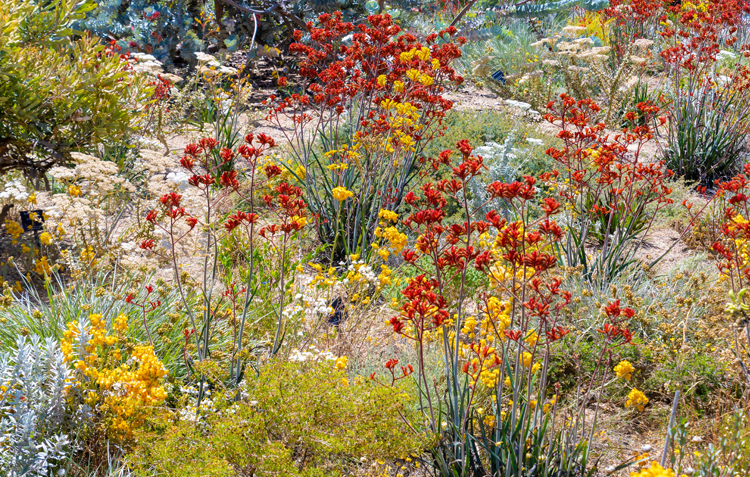
The best drought-tolerant flowers combine deep or fibrous roots, waxy or silvery foliage, and a natural tolerance for heat and poor soil. Standouts for Australian gardens are kangaroo paw, everlasting daisies, grevillea, salvia, gazania, lavender, sedum and yarrow. All flower for months on minimal water once their roots are established, and most attract bees and birds.
Drought tolerance is a plant's ability to keep growing through long dry spells, usually because it stores water, has a large root system, or slows water loss through its leaves. It does not mean the plant never needs water, especially in its first season.
Our top picks, mixing Australian natives with hardy exotics, are set out below.
|
Flower |
Native? |
Flower colour |
Position |
Best for |
|
Kangaroo paw (Anigozanthos) |
Yes |
Red, yellow, green, orange |
Full sun |
Sandy soil, bird-attracting feature clumps |
|
Everlasting / paper daisy (Xerochrysum) |
Yes |
Yellow, pink, white |
Full sun |
Fast colour, mass planting, cut flowers |
|
Grevillea |
Yes |
Red, pink, cream, orange |
Full sun to part shade |
Nectar for birds, shrubby borders |
|
Emu bush (Eremophila) |
Yes |
Pink, red, purple, yellow |
Full sun |
Hot, arid and inland gardens |
|
Correa (native fuchsia) |
Yes |
Pink, red, cream, green |
Part shade to sun |
Dry shade, winter flowering |
|
Brachyscome (native daisy) |
Yes |
Blue, mauve, white |
Full sun |
Groundcover, edging, pots |
|
Salvia |
No |
Purple, red, pink, blue |
Full sun |
Long flowering, bees, low fuss |
|
Lavender (Lavandula) |
No |
Purple, mauve, white |
Full sun |
Borders, fragrance, hot dry spots |
|
Gazania |
No |
Orange, yellow, pink, red |
Full sun |
Hot banks, coastal, groundcover |
|
Osteospermum (African daisy) |
No |
Purple, white, pink, yellow |
Full sun |
Showy mass colour, borders |
|
Sedum / stonecrop |
No |
Pink, red, rust |
Full sun |
Poor soil, autumn colour, pots |
|
Yarrow (Achillea) |
No |
Yellow, white, pink, red |
Full sun |
Very tough perennial borders |
|
Gaura |
No |
White, pink |
Full sun |
Airy movement, long season |
|
Statice (Limonium) |
No |
Purple, blue, white, pink |
Full sun |
Coastal, sandy soil, dried flowers |
Choose varieties suited to your climate zone (see the zone guide below). Availability and named cultivars vary by nursery and season.

What flowers grow best in dry soil?
Flowers that grow best in dry, sandy soil are those adapted to fast drainage and low fertility, including kangaroo paw, everlasting daisies, statice, gazania, sedum, lavender and yarrow. These plants resent wet feet and actually flower better when the soil is lean and free-draining rather than rich and damp.
Dry soil is usually sandy or gritty, which means water drains through quickly and few nutrients are held. The plants below are built for exactly that.
• Kangaroo paw and everlasting daisies are native to sandy Australian soils and rot in heavy, wet ground.
• Gazania and pigface (Carpobrotus) spread across hot, dry banks and sandy coastal gardens where little else survives.
• Sedum and statice store water in fleshy leaves or cope with salt-laden, sandy sites.
• Lavender and yarrow are Mediterranean-style plants that thrive in gritty, free-draining soil and full sun.
If your soil is heavy clay rather than sandy, drainage is the bigger risk than drought. Plant into raised mounds or improve the structure with gypsum and coarse organic matter first, and lean towards salvia, yarrow and grevillea, which handle a wider range of soils.
What flowers are good for a drought-tolerant garden?
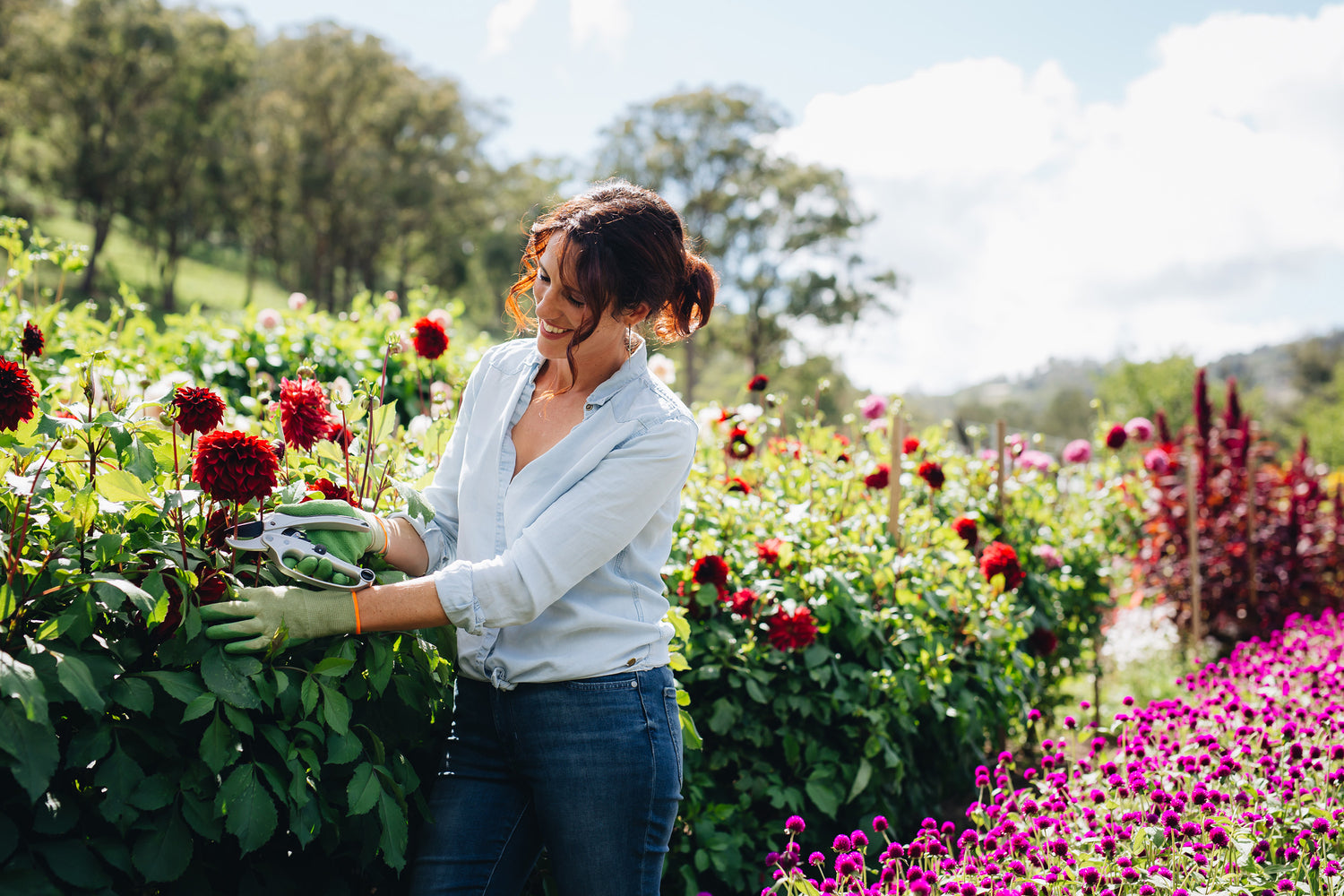
A good drought-tolerant garden layers flowers with different heights, root depths and flowering times so colour continues year-round on one watering routine. Combine structural natives like grevillea and kangaroo paw, mid-height perennials like salvia and yarrow, and groundcovers like gazania, brachyscome and pigface.
The aim is a planting that looks full and colourful while drawing on very little water. A few principles make that work:
1. Group plants by water need (hydrozoning). Hydrozoning means putting plants with similar water needs together, so you never overwater a tough plant to keep a thirsty neighbour alive.
2. Layer for year-round colour. Pair spring and summer flowers like everlasting daisies and salvia with winter-flowering correa and grevillea so something is always in bloom.
3. Use groundcovers as living mulch. Gazania, brachyscome and pigface shade the soil, cut evaporation and suppress weeds.
4. Favour natives for local resilience. Native flowers are adapted to Australian rainfall and soils, and they feed local bees and birds.
For a fully native approach, see our guide to growing an Australian native garden, and our list of drought-tolerant plants you should grow for trees and shrubs to build around your flowers.

How do you prepare the soil and plant them?
Prepare the soil for drought-tolerant flowers by improving drainage, keeping fertility modest, and mulching heavily after planting. Most drought-tolerant flowers fail from too much water and rich soil, not too little, so the goal is a free-draining bed, not a lush one.
1. Check drainage first. Dig a hole, fill it with water, and if it has not drained within a few hours, plant into raised mounds or add coarse sand and gypsum.
2. Go easy on fertiliser. Natives like grevillea and kangaroo paw dislike phosphorus, so use a low-phosphorus native food and skip rich manures.
3. Plant in autumn where you can. Autumn planting lets roots establish over the cooler months before their first summer, which is the single biggest factor in survival.
4. Mulch thickly. Apply a coarse mulch such as bark or gravel around, but not touching, the stems.
Mulch is the highest-value step. According to Sydney Water, applying 7 to 10 centimetres of mulch around plants can save up to 70% of the water otherwise lost through evaporation. That single habit does more for drought tolerance than almost anything else.
How do you water drought-tolerant flowers?
Water drought-tolerant flowers deeply but infrequently, and water regularly only for the first three months while roots establish. After that, most need a deep soak only during prolonged heat or dry spells. Frequent, shallow watering keeps roots near the surface and actually makes plants less drought-hardy.
Deep watering means wetting the soil to root depth so roots grow downwards chasing moisture. A slow trickle at the base beats a quick spray over the leaves.
• First 12 weeks: water two to three times a week, adjusting for rain and heat, until you see strong new growth.
• Established plants: a deep soak every week or two in summer is usually plenty, and often nothing in the cooler months.
• Time it right: water early in the morning so less is lost to evaporation and foliage dries before night.
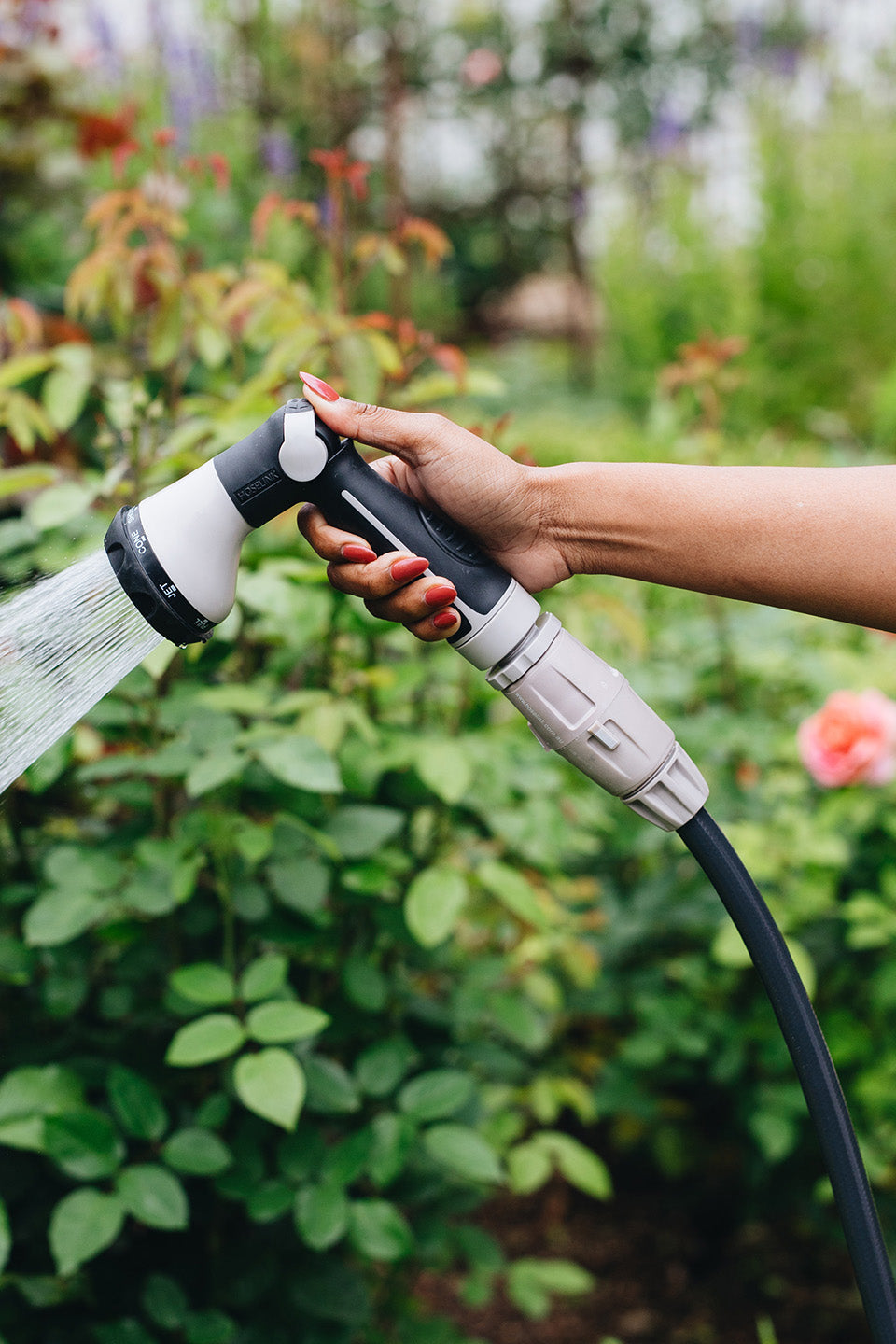
A slow, targeted delivery makes deep watering easy and efficient. Sprinklers have their place on lawns, but for flower beds they lose a lot to evaporation. According to Sydney Water, a running sprinkler can use around 999 litres per hour, so beds are better served by drip or soaker systems on a timer.
A Weeper Hose woven through the bed delivers a slow, deep soak to the roots, while a Root Waterer and Soil Breaker gets water past dry topsoil during establishment. Put either on an automatic tap timer and your watering stays deep, early and consistent without you standing there with a hose.
For a fuller method, see when you should water your garden and how to water your way to a flourishing flower patch.

Which flowers suit your climate zone and pots?
The best drought-tolerant flower for you depends on your climate zone, because a plant that thrives in arid Perth may struggle in the humid subtropics. Use the guide below to shortlist reliable performers for your region, then check plant labels for local suitability.
|
Climate zone |
Reliable drought-tolerant flowers |
|
Cool / temperate (Tas, Vic, ACT, southern NSW) |
Lavender, yarrow, salvia, sedum, correa, everlasting daisy |
|
Warm temperate (Sydney, Adelaide, Perth) |
Kangaroo paw, gazania, statice, grevillea, osteospermum, gaura |
|
Subtropical (SE Qld, northern NSW) |
Grevillea, salvia, pentas, gazania, bromeliads, pigface |
|
Arid / semi-arid (inland) |
Emu bush, kangaroo paw, everlasting daisy, grevillea, cacti and succulents |
|
Tropical (far north) |
Heliconia, bougainvillea, frangipani, salvia, native hibiscus |
Drought-tolerant flowers also do well in pots, which suit renters, balconies and courtyards. Choose a large pot, use a free-draining mix, and remember that containers dry out faster than garden beds, so they need more frequent watering in summer even for tough plants.
Gazania, sedum, brachyscome, lavender and kangaroo paw all pot up beautifully. Heavy-duty planter bags are an easy, movable option for a sunny courtyard.
Frequently asked questions
What is the most drought-tolerant flower?
Gazania, pigface and sedum are among the most drought-tolerant flowers, surviving hot, dry, sandy sites with almost no watering once established. For a native feature plant, kangaroo paw is exceptionally tough. No flower is completely waterless, though, especially in its first season.
Do drought-tolerant flowers still need watering?
Yes. Drought-tolerant flowers need regular watering for about the first three months while their roots establish. After that, most only need a deep soak during prolonged heat or dry spells. The label describes established plants, not brand-new seedlings.
What flowers survive full sun and little water?
Gazania, lavender, salvia, yarrow, statice, sedum and kangaroo paw all thrive in full sun with little water once established. Give them free-draining soil and a thick mulch, and they will flower through the hottest months with only occasional deep watering.
When is the best time to plant drought-tolerant flowers in Australia?
Autumn is the best time to plant drought-tolerant flowers in most of Australia, because roots establish over the cooler, wetter months before facing their first summer. Spring is the next best window. Avoid planting into the peak of summer if you can.
Can I grow drought-tolerant flowers in pots?
Yes. Gazania, sedum, brachyscome, lavender and kangaroo paw all grow well in pots. Use a large container and a free-draining mix, and water more often than you would in the ground, as pots dry out faster, especially in summer heat.
Ready to give your new flowers the best possible start? A deep, consistent watering routine in those first months is what turns a drought-tolerant flower into a thriving one. Explore our watering range, from weeper hoses and root waterers to tap timers, and set your garden up to look after itself.


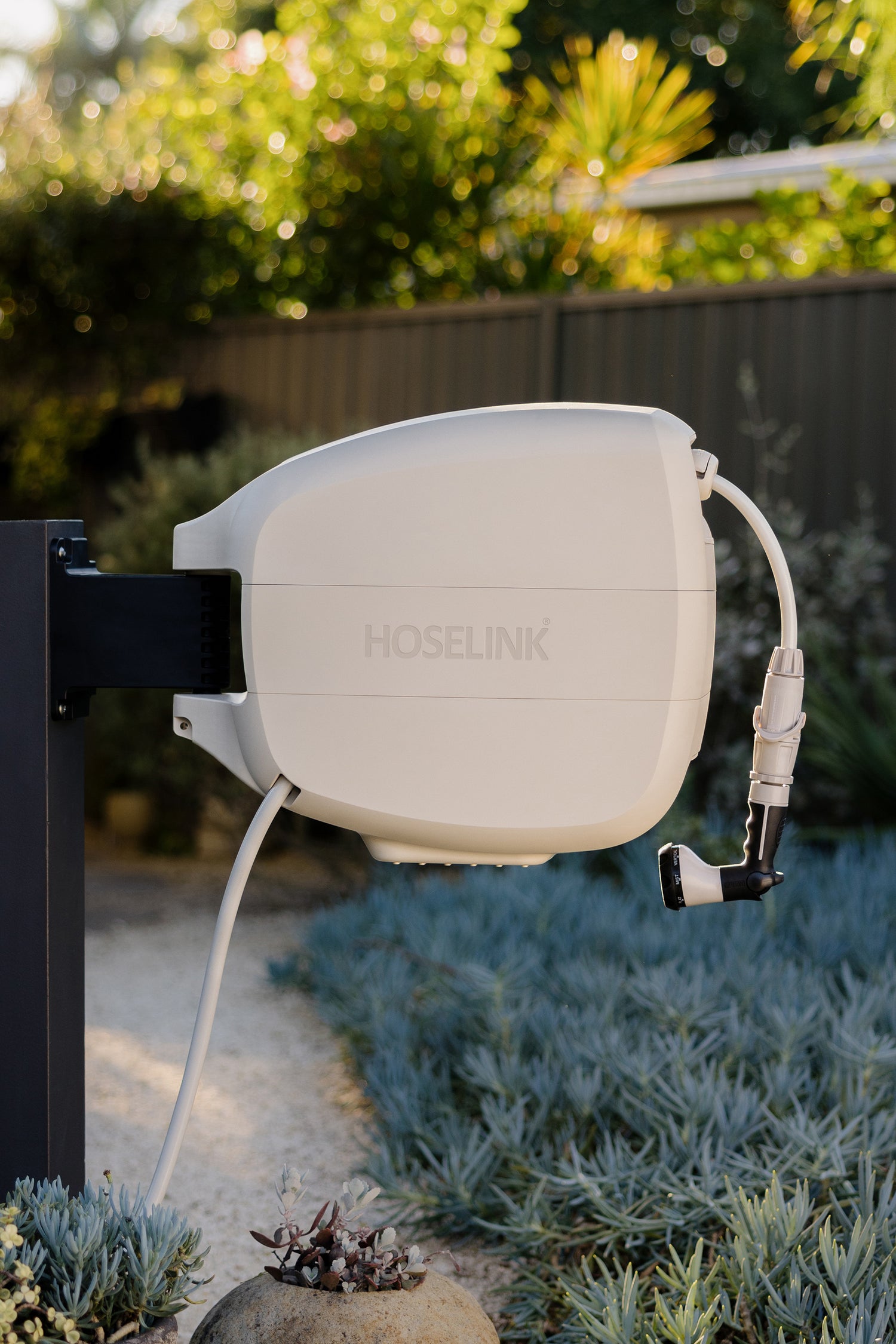
Evolve™ Retractable Hose Reel | Charcoal

Evolve™ Retractable Hose Reel | Beige