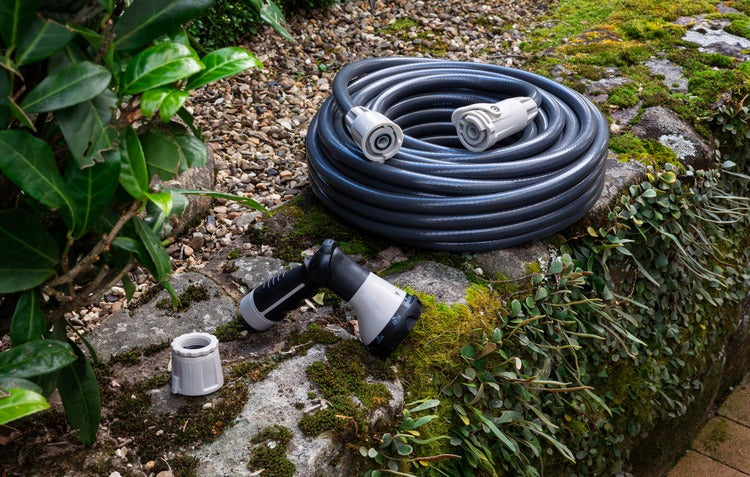
Looking for the best kink-free garden hose in Australia? The short answer: choose a hose with a reinforced, multi-layer build (a woven or knitted inner core resists kinking far better than cheap single-wall vinyl), then pair it with a fitting system that clamps the hose properly. Most kinks and bursts don't start in the hose at all, they start at a weak connector that lets the hose twist, leak and fold. Get both right and you'll have a hose that uncoils cleanly, holds pressure, and lasts for years in the Aussie sun.
Below is a practical, Australian-specific buyer's guide: what actually makes a hose kink-free, the connector factor almost everyone overlooks, how to match your hose to Australian tap fittings, and a side-by-side comparison of the main hose types.
What makes a garden hose kink-free?
"Kink-free" isn't marketing fluff — it comes down to three things working together: the material, the hose's memory, and the fittings on each end.
1. Material and construction
A hose's ability to resist kinking is mostly decided by how it's built. As a rule of thumb, more layers means fewer kinks:
- Single-wall vinyl (PVC): the cheapest option and the worst for kinking. It folds on itself the moment there's a bend, and it goes brittle after a season or two outdoors.
- Reinforced multi-layer hoses: a smooth inner tube, a woven or knitted mesh layer for strength, and a UV-stable outer jacket. The mesh is what stops the wall collapsing into a kink.
- Hybrid polymer hoses: a newer, lighter material that stays flexible in the cold and lies flat without coiling memory.
2. Hose memory
"Memory" is the hose's tendency to hold the coiled shape it was stored in. A hose with high memory springs back into loops the moment you drag it out, and those loops are where kinks form. Softer, better-quality hoses and hybrid polymers have low memory, so they relax and lie flat rather than fighting you across the lawn.
3. The fittings on each end
This is the part most guides skip, and it's the one that matters most in practice. If the fitting on the end of your hose is bulky, stiff, or badly balanced, it drags and twists the last stretch of hose every time you pull it — and that twist travels back down the line as a kink. A lightweight, free-moving connector lets the hose follow you instead of fighting you.
Why connector quality is the factor everyone overlooks
Here's the honest truth from 25+ years of fixing hose frustrations: the hose itself is only half the story. The other half is the connector system, and it's where most watering headaches actually come from.
Standard "click-on" fittings are the usual culprit. They rely on a small plastic collar gripping the outside of the hose. Under pressure, especially an Aussie summer with the tap on full, that grip lets go. The result is the classic soak-your-shoes moment: the fitting bursting off the hose, or a slow leak at the tap that drips all day. Every time a fitting pops off or leaks, you yank and re-seat the hose, and that repeated wrestling is exactly what works kinks into it.
So a genuinely kink-free setup needs two things: a well-built hose and a connector system that stays put, seals properly, and swivels freely so the hose isn't being twisted at the ends. Solve the connector, and you solve most of the kinking, leaking and bursting in one go.
The Hoselink connector system: built to stop the twist
Hoselink was founded in 1999 by Tim Kierath for exactly this reason, to fix the everyday frustration of failing hose fittings. The whole range is built around one idea: a connector system that clamps the hose securely and seals with a rubber O-ring, so it doesn't burst, leak or drag your hose into knots.
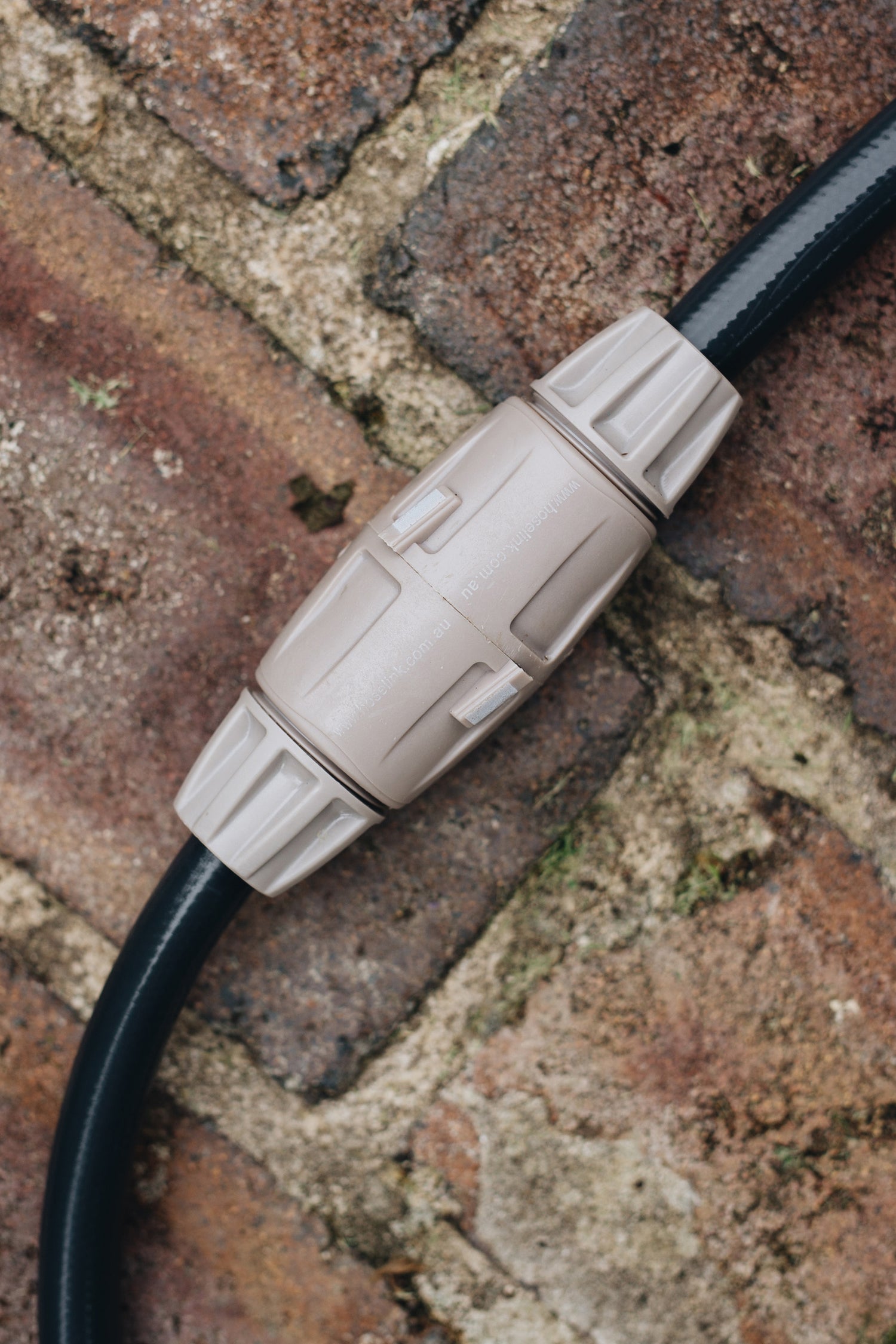
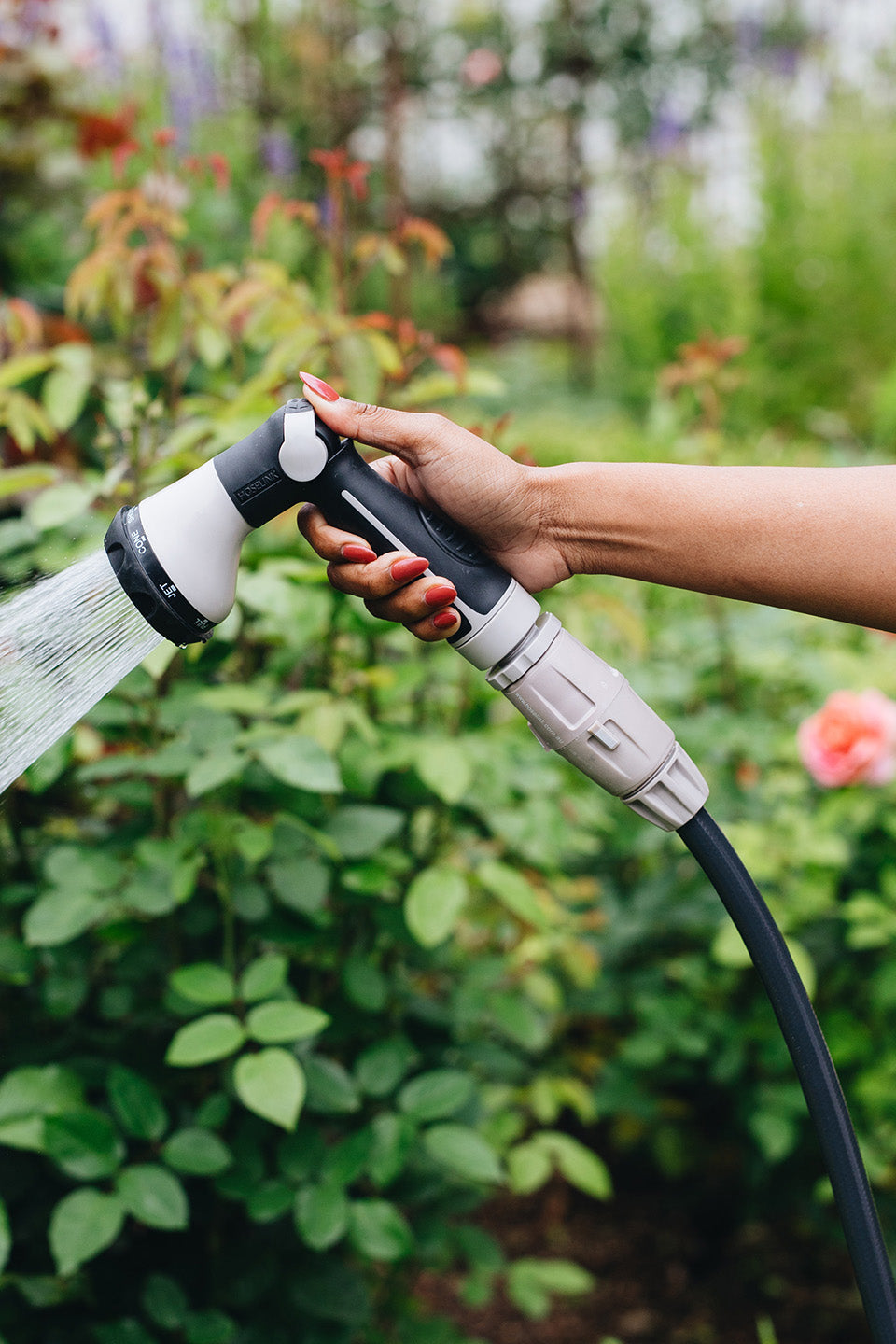
Instead of a click-on collar, a Hoselink Hose End Connector clamps securely around the hose and seals with a rubber O-ring for a watertight join that's guaranteed never to burst off. The same thinking runs through the Universal Tap Connector and the Accessory Connector with Swivel, which lets your spray gun or nozzle rotate freely so the hose isn't twisted every time you move around the garden. Because it's one compatible system, every piece; tap, hose ends, joiners, accessories, locks together the same way.
A quick note on which range to choose. Hoselink offers two retractable reel families that live side by side: the Classic Retractable Hose Reel and the newer Evolve™ Retractable Reel. Both use the no-burst connector system; Evolve is the next step in the range with its own refinements. If you're buying loose fittings, the standard 12mm range suits most home hoses, while the 18mm range is built for higher-flow and commercial use. When in doubt, our Customer Care team is happy to help you match the right parts to your tap and hose.
Matching your hose to Australian tap fittings
One reason the big overseas hose brands don't quite fit here: Australian taps and fittings follow their own standards. It's worth a 30-second check before you buy.
- Thread size: most Australian garden taps use a 3/4" BSP thread, though outlet sizes vary by state (NSW taps often have a 1" outlet). A good universal tap connector is designed to fit the common sizes, and adaptors cover the rest.
- Hose diameter: the majority of home hoses in Australia are 12mm internal diameter. Larger 18mm hoses move more water and are common in rural, commercial and high-flow setups. Fittings are sized to the hose, so match them; 12mm fittings won't seal on an 18mm hose and vice versa.
- UV and heat: Australian conditions are tough on cheap hoses. Look for a UV-stable outer layer so the hose doesn't go chalky and split after one summer.
The advantage of a single connector system is that once you've matched it to your tap, everything downstream just clicks together; no mismatched threads, no leaking adaptors, no trip back to the shops.
Garden hose types compared
Here's how the main hose types stack up for kink resistance, weight and longevity, so you can pick what suits your garden.
| Hose type | Kink resistance | Weight | Typical lifespan | Best for |
|---|---|---|---|---|
| Single-wall vinyl (PVC) | Poor - kinks easily | Light | 1–2 seasons | Occasional, budget use only |
| Reinforced multi-layer | Very good | Medium | 5+ years | Everyday household watering |
| Rubber | Good (heavy-duty) | Heavy | 5–10 years | Hard-wearing, hot-water and commercial jobs |
| Hybrid polymer | Excellent - low memory | Very light | 5+ years | Easy handling, cold-weather flexibility |
| Expandable | Excellent (won't coil) | Ultra light | 2–4 years | Small gardens, courtyards, easy storage |
For most Australian households, a reinforced multi-layer or hybrid polymer hose paired with a secure connector system is the sweet spot: kink-resistant, easy to handle, and built to last more than a single summer. Whichever hose you choose, the connectors are what keep it kink-free and leak-free in daily use.
How to choose the right kink-free hose
Run through this quick checklist before you buy:
- Build: pick a reinforced multi-layer or hybrid polymer hose over single-wall vinyl.
- Length: measure the furthest point in your garden and add a couple of metres, an over-long hose just gives you more to kink and store.
- Fittings: choose a connector system that clamps and seals rather than click-on collars, and use swivel connectors at the accessory end.
- Fit: match the fittings to your tap thread and hose diameter (12mm for most homes, 18mm for high-flow).
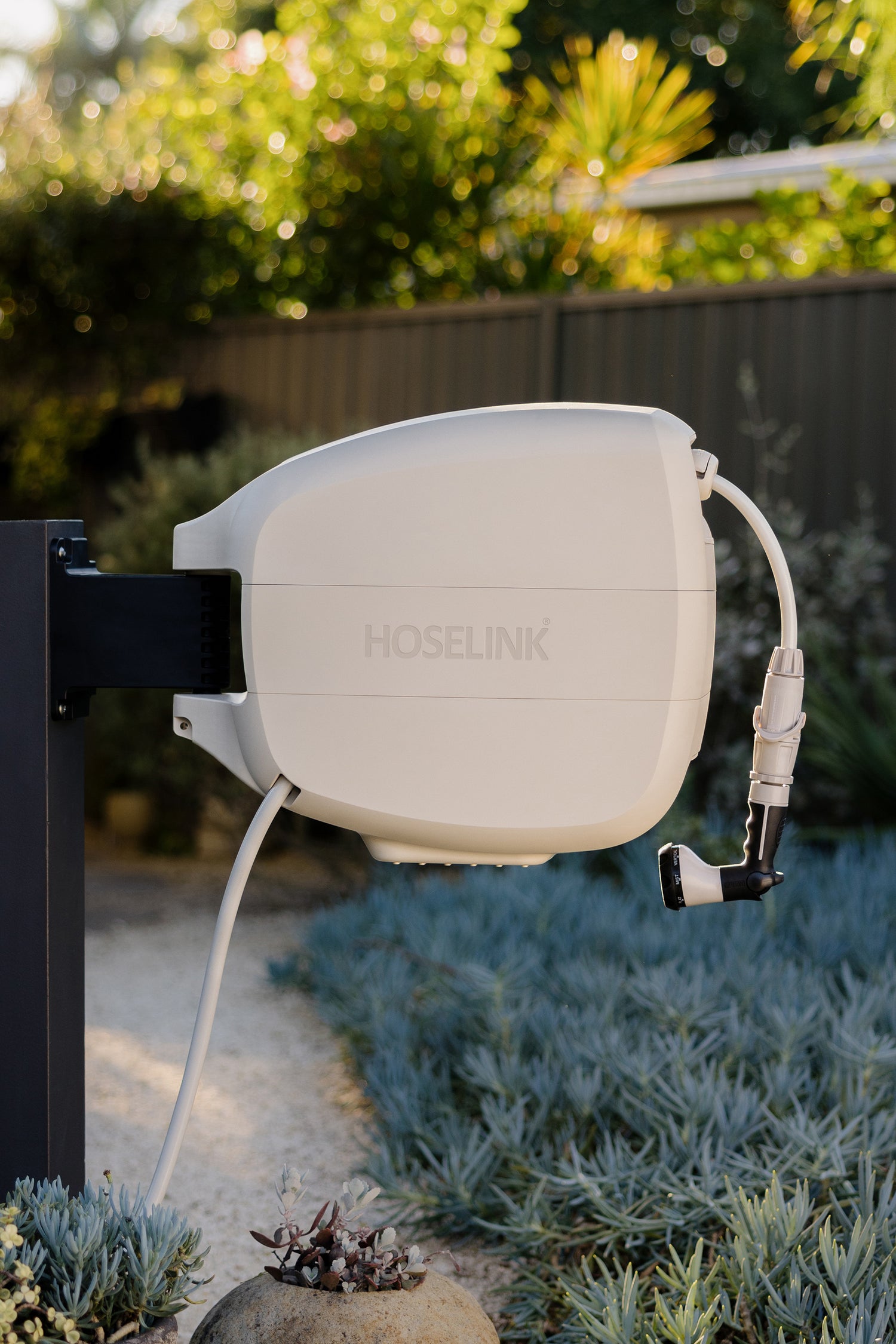
- Storage: a retractable reel keeps the hose off the ground and rewinds it without loops, which is one of the best ways to prevent kinks between uses.
Ready to sort your setup? Browse Hoselink's range of garden hoses, explore our hoses & reels, or start with a fitting kit and build from there. Every Hoselink purchase is backed by a warranty and 30-day money-back guarantee. We're also Aussie owned and operated since 1999.