Short answer: The best garden gloves for most Australian gardeners are lightweight, breathable gloves with a coated palm — they give you grip on tools without the sweat and stiffness of heavy leather. Choose a snug fit, an elastic cuff to keep soil out, and a machine-washable liner. Heavy-duty leather is only worth it for thorns and hard landscaping.
Most people buy garden gloves twice. The first pair is bought on price, turns out to be hot, stiff and clumsy, and ends up in the bottom of the shed after one weekend. The second pair is the one they actually wear. This guide is about skipping straight to the second pair.
The honest truth is that there is no single ‘best’ garden glove, because pruning roses, potting seedlings and shifting pavers ask completely different things of your hands. What there is, is a right glove for the job you actually do most - and for the majority of Australian home gardeners, that job is light-to-medium work in warm weather, which points to a very specific kind of glove.
What actually matters in a garden glove
Four things separate a glove you wear from a glove you own.
Breathability. This is the one people underrate, and in an Australian summer it is the one that decides whether the gloves get used. A glove that traps heat makes your hands sweat, and sweaty hands inside a glove lose grip and start to chafe. Knitted liners - bamboo, cotton or bamboo-blend - breathe far better than solid leather or fully coated PVC, which is why they have largely taken over for general garden work.
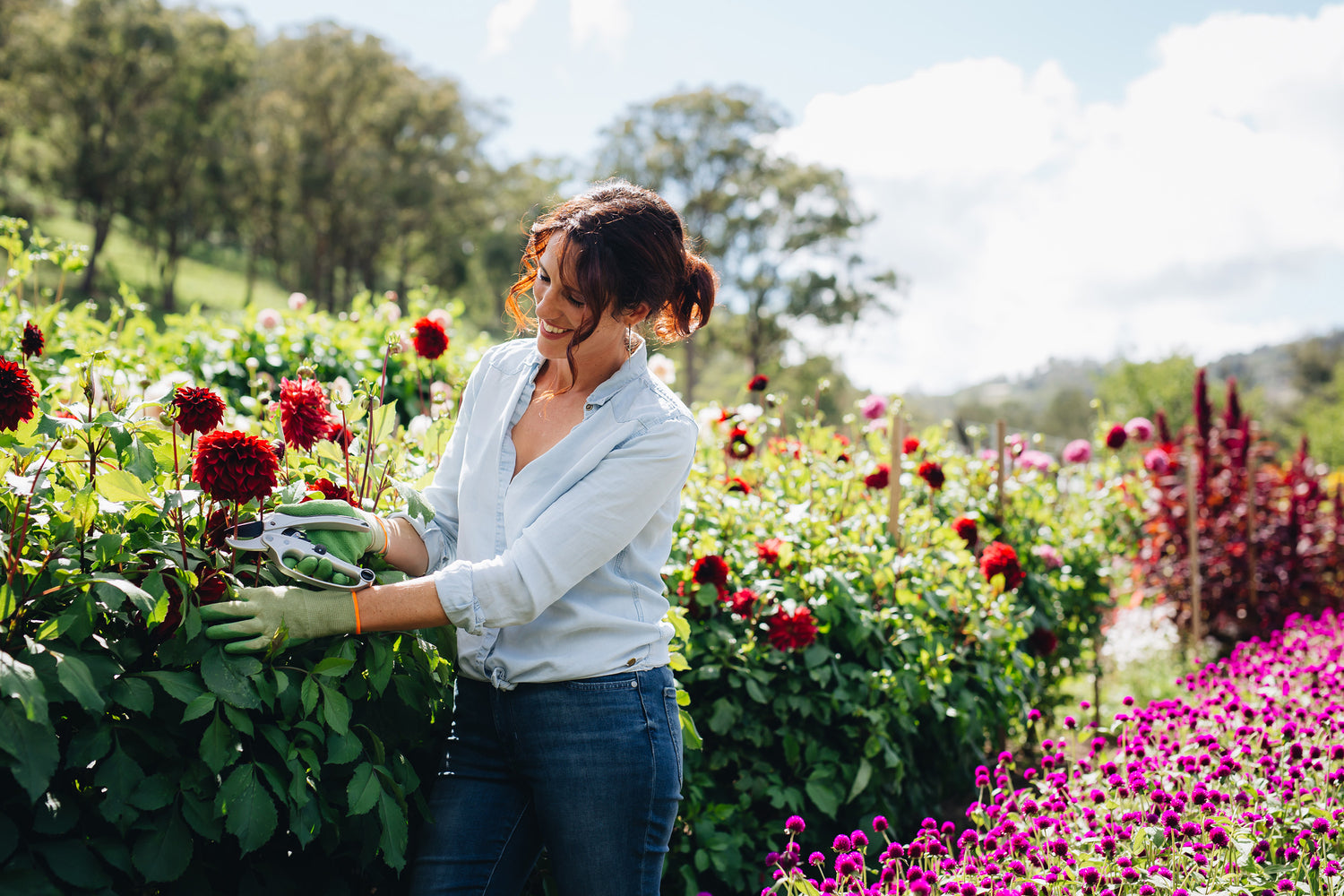
Grip. A bare knitted glove is comfortable but useless the moment you pick up a wet trowel or a set of secateurs. The fix is a coated palm: a thin layer of latex, nitrile or polyurethane dipped onto the palm and fingers, leaving the back of the hand uncoated so it can still breathe. This dipped-palm design is the single best comfort-to-grip compromise available, and it is what most quality general-purpose garden gloves now use.
Fit. A loose glove is worse than no glove. Excess material at the fingertips means you cannot feel a seedling stem or a small fitting, so you take the gloves off - and then you are gardening bare-handed anyway. Gloves should be snug enough that the fingertips of the glove end roughly where your fingertips end.
The cuff. An elastic or ribbed cuff keeps soil, mulch and grit out of the glove. Open-cuffed gloves fill up the first time you dig, and once there is grit inside, the glove becomes an abrasive. It is a small detail that has an outsized effect on whether a pair lasts a season.
Durability matters too, of course, but it is worth being realistic: no glove survives forever. A glove you can machine-wash and that costs less than a takeaway coffee is a better proposition than an expensive pair you are reluctant to get dirty.
The main types of garden glove, and what each is actually for
Coated-palm knitted gloves (the everyday default). A breathable knitted liner with a latex or nitrile dipped palm. Light, dexterous, cheap, washable. These handle weeding, planting, potting, general tidying, hose and fitting work, and light pruning. For most home gardeners this is the only pair they need. Their limit is puncture resistance - they will not stop a rose thorn or a blackberry cane.
Leather and suede gloves (thorns and heavy work). Genuinely tough and puncture-resistant, which makes them the right call for roses, bougainvillea, blackberry removal, and handling timber, wire or stone. The trade-offs are real: they are hot, they take time to break in, dexterity is poor, and once they get soaked they dry stiff. Buy these in addition to a general pair, not instead of one.
Gauntlet gloves (forearm protection). Essentially a leather or synthetic glove with an extended cuff covering the forearm. Only worth it if you regularly prune thorny shrubs or reach into dense growth. Very hot, very clumsy - a specialist tool.
Waterproof and PVC-coated gloves (wet work). Fully coated, so nothing gets through. Useful for washing pots, ponds, wet mulch and handling anything you do not want on your skin. Sweaty for anything longer than a short task, because there is nowhere for moisture to go.
Nitrile-dipped disposable-style gloves (light and tactile). Very thin, very tactile, good for seed sowing and delicate propagation. Minimal protection and short life.
Comparison at a glance
| Type | Breathability | Grip | Puncture | Dexterity | Best for |
|---|---|---|---|---|---|
| Coated-palm knitted | High | High | Low | High | Everyday garden work |
| Leather / suede | Low | Medium | High | Low | Roses, thorns, landscaping |
| Gauntlet | Very low | Medium | High | Very low | Dense / thorny pruning |
| Waterproof / PVC | Very low | Medium | Medium | Medium | Wet and dirty jobs |
| Nitrile dipped-thin | Medium | Medium | Very low | Very high | Seed sowing, propagation |
Getting the size right
Glove sizing is where most online glove purchases go wrong, and it is easily avoided. The reliable measurement is the tip of your middle finger to your wrist. Measure that, then match it to the size chart rather than guessing from your usual clothing size.
As a reference point, Hoselink’s Lightweight Bamboo Garden Gloves size as follows:
| Size | Middle fingertip to wrist |
|---|---|
| Small | 19 cm |
| Medium | 20 cm |
| Large | 21 cm |
If you fall between two sizes, size down rather than up for general garden work - the knitted liner has some give, and a slightly snug glove keeps its dexterity. Size up only if you are buying for heavy work and expect to wear a liner underneath.
Best glove for your situation
Best all-rounder for most Australian gardens: a breathable knitted glove with a dipped palm and elastic cuff. Hoselink’s Lightweight Bamboo Garden Gloves are built to exactly this pattern - a seamless knitted bamboo liner that stays cool and is naturally anti-odour, a latex-dipped palm for grip on tools, and elastic cuffs to keep debris out. They are machine washable and sized S/M/L, and they currently carry a 4.7-star rating from 264 reviews at $7.50.
Best for roses and thorny pruning: a leather or gauntlet glove. Keep these as a second pair and reach for them only when the job calls for it.
Best for hot-weather gardening: the lightest breathable knitted glove you can find with a partial (palm-only) coating. Anything fully coated will make summer work miserable.
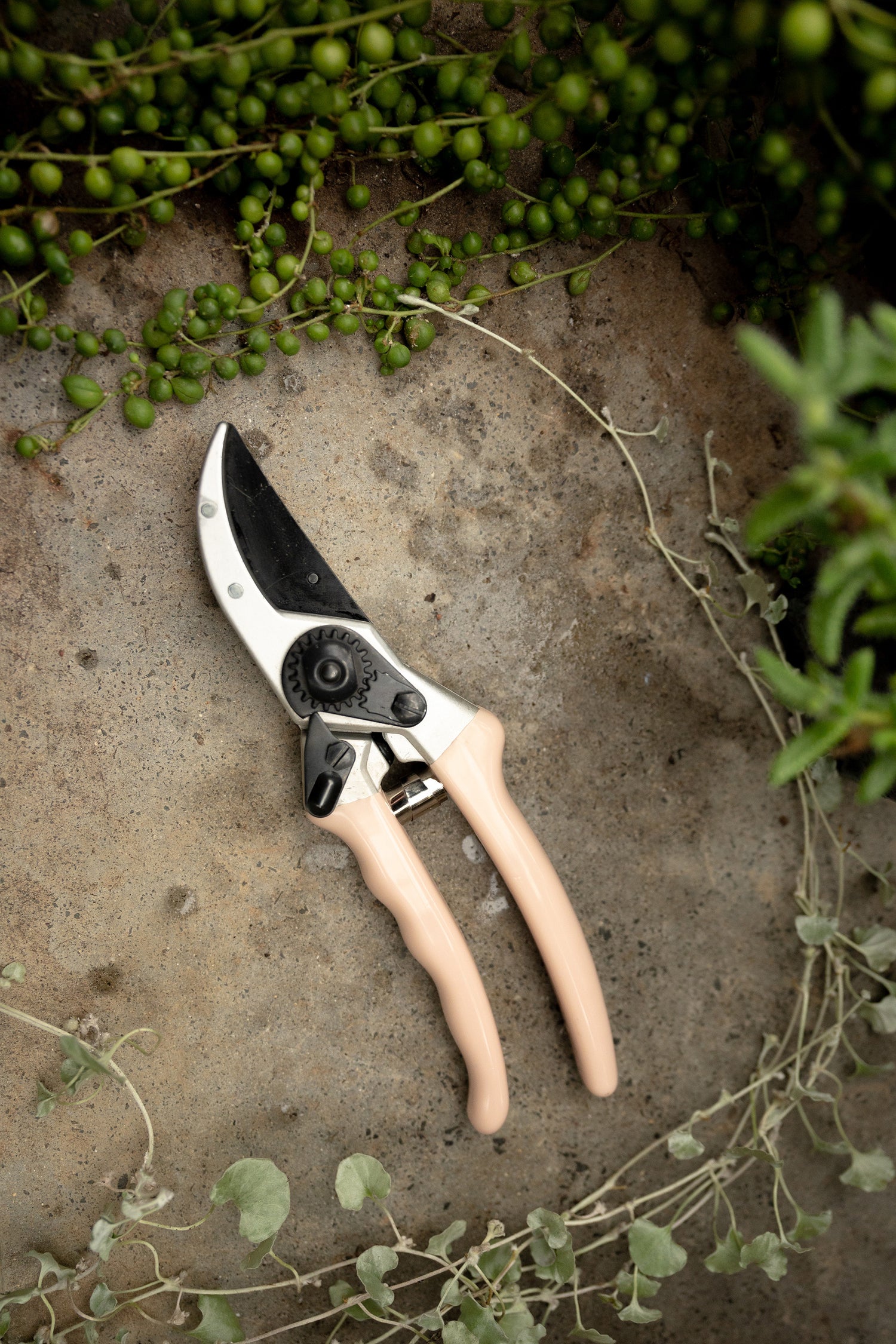
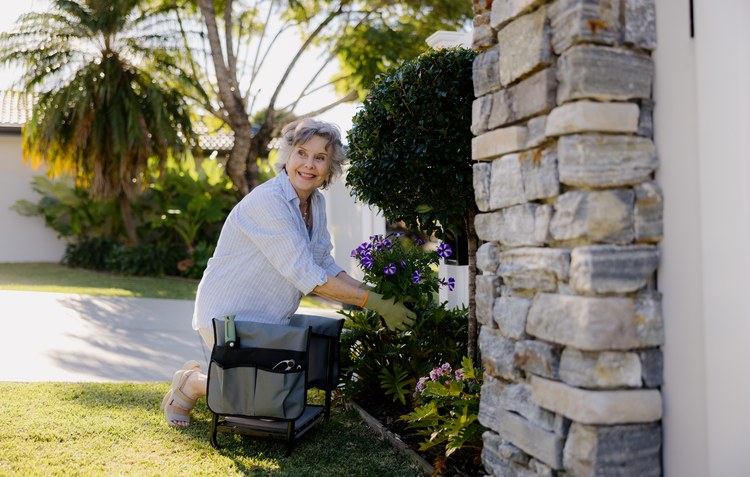
Best for arthritic or sensitive hands: a seamless knitted liner matters here more than anywhere else, because internal seams are what cause pressure points and rubbing. A snug, low-bulk glove also means less grip force is needed to hold a tool, which reduces hand fatigue - and pairing gloves with lighter-effort tools such as ratchet pruners or a folding kneeler and seat takes even more strain off your hands and knees. For more on setting up a garden that is easier on your body, see our guide to the easiest garden watering setup for seniors and arthritic hands.
Best for children and small hands: size down and prioritise fit over toughness — a glove a child cannot feel through is a glove they will take off.
Making them last
Wash them. Most knitted garden gloves are machine washable, and grit left in the fibres is what wears the coating through. Wash in cold water, skip the fabric softener (it clogs the knit and reduces breathability), and always air-dry — a hot dryer will crack a latex or nitrile palm coating.
Dry them properly between uses rather than leaving them balled up in a damp shed, and store them as a pair so you are not hunting for a match. Replace them when the palm coating starts to flake or the fingertips wear through; at entry-level prices there is no sense nursing a worn-out pair when a fresh one costs less than a coffee.
The short version
Buy one good breathable, dipped-palm, elastic-cuffed pair in the right size and wear it for everything. Add a leather pair only if you have roses or do hard landscaping. Wash them, air-dry them, and replace them when the palm goes. That is genuinely the whole decision.